

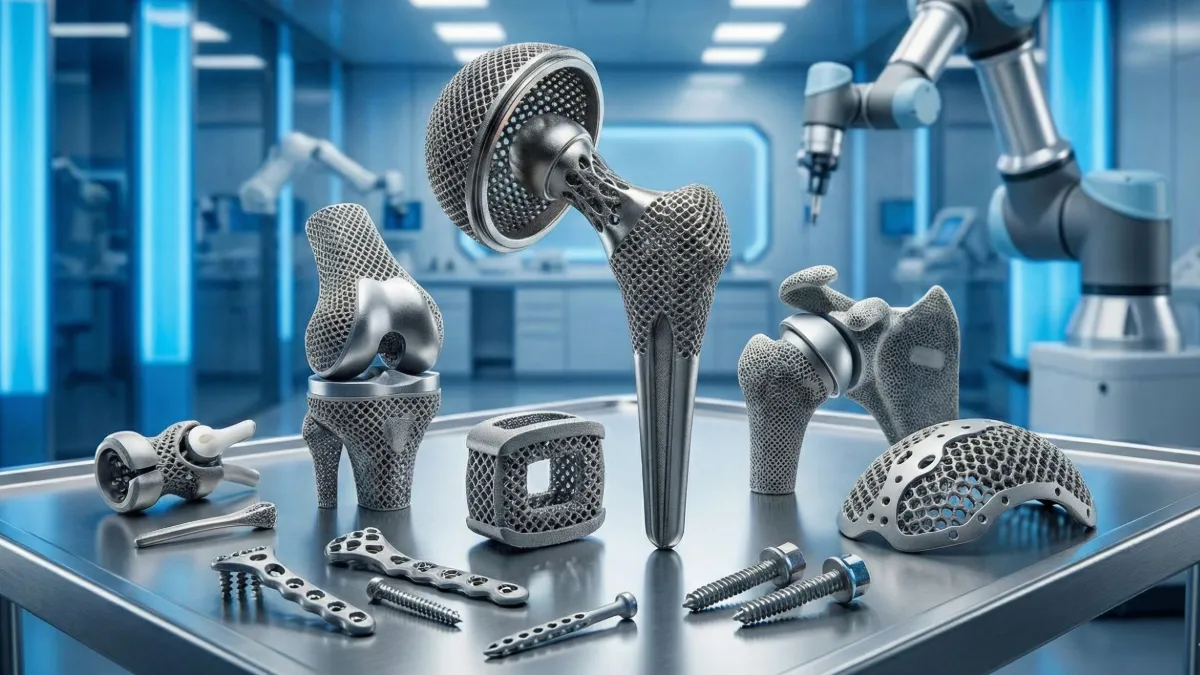
Orthopedic surgery is undergoing a significant transformation, driven by innovations that emphasize precision, personalization, and improved patient outcomes. A major advancement is the growing use of 3D-printed orthopedic implants in Turkey. This technological development is changing how we treat bone and joint problems. Through the use of advanced imaging techniques, digital modeling, and additive manufacturing, 3D printing allows for the production of implants custom made to fit a patient’s unique physical structure. Therefore, this approach provides a more precise, long-lasting, and patient-focused method for orthopedic treatment.
Turkey’s healthcare system is evolving rapidly, supported by a skilled pool of medical professionals and a strong commitment to adopting the latest technologies. As a result, the country is increasingly emerging as a leading center for innovative orthopedic treatments. Moreover, with the growing adoption of 3D printing in hospitals, patients are beginning to experience tangible benefits. For example, these advancements enable tailored solutions that enhance surgical accuracy, accelerate recovery times, and ultimately improve long-term mobility.
What Are 3D-Printed Orthopedic Implants?
Manufacturers create 3D-printed orthopedic implants using 3D printing methods that build objects layer by layer based on digital blueprints. Unlike traditional implants, which manufacturers produce in standard sizes and designs, clinicians customize 3D-printed implants using patient-specific imaging data from CT or MRI scans. Thus, this approach guarantees a precise anatomical adjustment, thereby achieving a closer alignment with the patient’s natural bone structure.
The procedure starts with detailed imaging to accurately depict the patient’s anatomy. Then, engineers and surgeons collaborate to create an implant that corresponds to the specific contours of the affected region. Manufacturers then print the final implant using biocompatible materials, such as titanium alloys or advanced medical-grade polymers. In this way, the resulting implant provides strength, longevity, and compatibility with human tissue.
Why Personalised Implants Are Transforming Orthopedic Care
Orthopedic implants often require adjustments during surgery to fit properly. This can make the surgery longer and affect how well the implant works. Custom 3D-printed implants sidestep much of this dilemma, offering a solution specifically designed for each patient.
A custom implant redistributes weight more evenly across joints, which boosts stability and allows for more fluid motion.
This is especially useful in complex situations like revision surgeries, congenital deformities, or bone loss from trauma, where standard implants might not provide the best results.
Patients experience better functional recovery, a more comfortable fit, and a lower chance of implant loosening. Surgeons also benefit from increased control and predictability. This enables more precise surgical planning and execution.
Key Applications of 3D Printed Orthopedic Surgery in Turkey
Joint Replacement and Arthroplasty
3D-printed implants are becoming more common in hip, knee, and shoulder replacement surgeries. These custom-made parts can better mimic the natural shape of joints, which improves movement, reduces wear, and extends how long the implant lasts.
Spinal Implants and Vertebral Reconstruction
In spinal surgery, surgeons use patient-specific cages, rods, and vertebral implants to enhance spinal stability and improve alignment. Also, porous 3D-printed structures help bones fuse and integrate, which supports the long-term health of the spine.
Trauma and Complex Bone Repair
For patients with severe fractures or large bone defects, 3D-printed implants provide a tailored structural solution. These implants can restore irregular bone shapes with exceptional precision, improving healing and reducing complications.
Orthopedic Oncology
Customized implants help reconstruct bone while preserving surrounding tissue after tumor removal. This is essential for limb-salvage procedures, supporting both physical function and quality of life.
Paediatric Orthopedics
Children with congenital skeletal abnormalities can benefit from implants designed to match their developing anatomy. This improves corrective outcomes and reduces the need for repeated interventions.
Technological Advantages of 3D-Printed Orthopedic Solutions
Exceptional Precision and Fit
The use of patient-specific data in implant design allows for a better anatomical fit. Consequently, surgeons improve alignment, reduce implant stress, and minimize the risk of postoperative complications.
Improved Bone Integration
3D printing enables the creation of porous implant surfaces, thereby promoting bone formation and the integration of bones. This, in turn, boosts implant stability and decreases the dependence on bone cement.
Reduced Surgical Time
With accurate preoperative planning and ready-made custom implants, surgeries often become more efficient. This reduces operating room time and lowers infection risks.
Advanced Surgical Planning
Surgeons now have the option of utilizing physical, 3D-printed models of a patient’s anatomy prior to the actual procedure. This aids in more effective planning, boosts confidence, and ultimately improves surgical precision.
Material Innovation
Manufacturers craft today’s implants from lightweight, robust materials that offer exceptional biocompatibility, resist corrosion, and deliver strong mechanical performance.
Benefits for Patients Undergoing 3D-Printed Implant Surgery
Patients who get 3D-printed orthopedic implants frequently heal faster. This is because the surgery is less damaging and the implants fit better. Since these implants are made just for them, patients might find their joints are more stable. They feel more comfortable, and they can move around better in the long run.
There are also other advantages. The chances of needing more surgery are lower, and the results look and work better. Patients can also feel more sure that the implant will last. For people from other countries looking for top-notch care, Turkey has a lot to offer. They have modern hospitals, skilled surgeons, and prices that are often lower than in other countries.
Turkey’s Role in Advanced Orthopedic Innovation
Turkey’s healthcare system has seen notable modernization, with substantial investments in medical technology, research, and clinical training. Orthopedic practices in many hospitals now incorporate digital imaging, robotic-assisted surgery, and digital manufacturing.
The presence of internationally accredited hospitals, along with multilingual medical teams and excellent post-operative care, has boosted Turkey’s attractiveness as a location for advanced orthopedic procedures. As 3D printing gains attraction, the country further strengthens its standing in providing innovative and accessible musculoskeletal care.
Safety, Regulation, and Quality Standards
In Turkey, the development of 3D-printed orthopedic implants adheres to strict regulatory guidelines that are consistent with global medical device standards. To guarantee longevity, safety, and clinical effectiveness, each implant is subjected to mechanical testing, sterilization procedures, alongside quality control measures. Responsible innovation, while prioritizing patient safety, is fostered through close collaboration among orthopedic surgeons, biomedical engineers, and regulatory bodies. Furthermore, ongoing clinical research serves to validate the sustained performance of these customized implants over time.
Challenges and the Future of 3D-Printed Orthopedic Implants
Despite its promise, widespread adoption of 3D printing in orthopedics has been hindered by factors such as high production costs, lengthy lead times, and the necessity for standardized procedures. Nevertheless, advancements in technology are accelerating the process, reducing expenses, and broadening compatibility with various biomaterials. Looking ahead, we can anticipate the emergence of bio-printed tissues, intelligent implants capable of monitoring recovery, and increased integration of artificial intelligence in implant design. As these innovations unfold, 3D printing is poised to play an increasingly significant role in orthopedic surgery globally.
Future developments are expected to include bio-printed tissues, smart implants capable of monitoring healing, and expanded use of artificial intelligence in implant design. As these innovations progress, 3D printing is set to play an increasingly central role in orthopedic surgery worldwide.
The Future of Orthopedic Surgery in Turkey
The integration of 3D printing into orthopedic care represents a shift towards more precise, personalized, and outcome-driven treatment. By combining advanced imaging, digital modelling, and customized implant production, Turkey continues to elevate its standards in musculoskeletal healthcare.
As research, clinical expertise, and technological infrastructure expand, patients can expect more efficient surgeries, improved recovery experiences, and enhanced long-term mobility through next-generation orthopedic solutions.
Conclusion
The proliferation of 3D-printed orthopedic implants in Turkey signifies a wider shift within the field of orthopedic surgery. This convergence of innovation and patient-specific care aims to enhance clinical results. Custom implants provide increased precision, facilitate superior bone integration, and promote more effective functional rehabilitation. Consequently, 3D printing is establishing itself as a fundamental element of contemporary orthopedic interventions.
In the context of Turkey’s dynamic healthcare environment, institutions like Avicenna International Hospital are actively contributing to the progression of modern orthopedic methodologies. They achieve this by endorsing technologically sophisticated surgical techniques and upholding rigorous standards of patient-focused care.
Yes. Manufacturers produce these implants in accordance with internationally recognized safety standards, using biocompatible materials and rigorous quality assurance protocols to ensure long-term reliability.
Clinicians widely use these implants in joint replacements, spinal surgery, trauma reconstruction, complex bone defect repair, and orthopedic oncology cases that require customized solutions.
In many cases, yes. A personalized fit can enhance stability, reduce surgical trauma, improve biomechanics, and support faster rehabilitation with better long-term outcomes.