
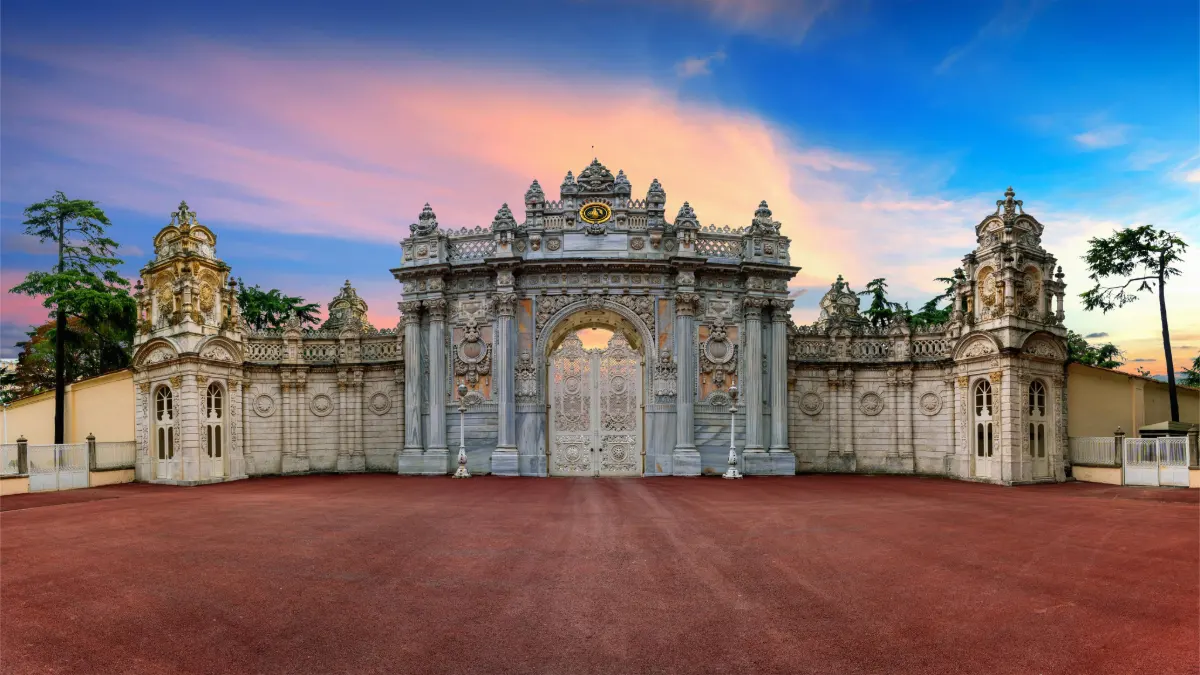
Health tourists who go to Dolmabahçe Palace in Istanbul often want more than just great medical care. They want experiences that will help their bodies and minds. Dolmabahce Palace Istanbul is on the European side of the Bosphorus and is the perfect place to take a refined trip through history, art, and peace.
Sultan Abdülmecid I ordered the palace to be built in a modern, European style, which was different from the way Topkapı Palace was built. Architects Garabet Balyan and Nigoğayos Balyan built it between 1843 and 1856. Today, it is a perfect blend of Ottoman and Western architectural styles, with Baroque, Rococo, and Neoclassical influences.
For patients who are going to Istanbul for treatment, Dolmabahce Palace Istanbul is a peaceful cultural retreat that is perfect for recovery or light exploration after medical procedures.
Architectural Grandeur of Dolmabahce Palace Istanbul
The palace is more than just a historical site; it also makes a statement about architecture. Dolmabahce Palace Istanbul is the biggest palace in Turkey, covering 45,000 square meters. It has:
- 285 rooms
- 46 big halls
- 6 traditional Turkish baths (hamam)
- 68 restrooms with very detailed designs
Its opulent interiors are covered in 14 tons of gold leaf, and 600 oil paintings hang on the walls, showing off both Turkish culture and art from around the world.
One of the best things about it is the Ceremonial Hall, which has the world’s largest Bohemian crystal chandelier, which weighs an incredible 4.5 tonnes and has 750 lamps. Visitors will never forget seeing the Crystal Staircase, which is made of mahogany, brass, and Baccarat crystals. It is one of the most famous features of the palace.
For health tourists, these beautiful interiors create a calm but inspiring space that lets them escape from clinical settings.
Dolmabahce Palace Istanbul: A Walk Through History
When you walk through Dolmabahce Palace in Istanbul, it feels like you’re in a story. The palace was home to six Ottoman sultans until 1924. After that, it became closely linked with Mustafa Kemal Atatürk, who used it as his presidential home.
Atatürk’s room is one of the most moving details. All the clocks in the room are set to 09:05 AM, the time of his death on November 10, 1938. This symbolic moment still has a big impact on people in Turkey.
The name of the palace, which means “filled garden,” comes from the fact that it used to be a bay on the Bosphorus that was turned into an imperial garden in the 18th century. Today, the gardens around it, which were made by Italian craftsmen, offer a peaceful outdoor experience full of color, scent, and peace.
Why Health Tourists Should Visit Dolmabahce Palace Istanbul
For international patients who come to Istanbul, adding cultural experiences to their trip can greatly improve their emotional health. Dolmabahce Palace in Istanbul is a great place for health visitors because:
- It gives you a low-intensity walking experience that is great for recovery.
- The views of the Bosphorus create a peaceful, healing environment
- The gardens make a quiet place to relax.
• The historical ambiance promotes mental rejuvenation
The palace is also in the center of Beşiktaş, so it’s easy to get to from major hospitals and hotels.
Dolmabahçe Mosque, the Clock Tower, and the Istanbul Naval Museum are all close by and add to the experience without requiring a lot of travel.
Tips for Visiting Dolmabahce Palace Istanbul
If you’re a health tourist, here are some things to think about to make the most of your trip:
- Buy tickets ahead of time to avoid long lines.
- Go on guided tours to learn more about history
- Put on shoes that are easy to walk in, since you will be walking around the palace.
• Set aside 1–2 hours for a full visit - Follow the rules for taking pictures, as taking pictures inside is not allowed.
When to Go
The best time to visit Dolmabahce Palace in Istanbul is in the spring, from March to May, when the weather is nice and the gardens are at their best. To avoid crowds, go early in the morning or late in the afternoon.
Hours of Operation
• From 9:00 AM to 4:00 PM - Not open on Mondays and Thursdays
The Artistic and Cultural Richness of Dolmabahce Palace Istanbul
The palace is a work of art in addition to being big and fancy. Every detail shows amazing skill, from the hand-woven silk carpets to the detailed wood carvings.
The palace also brought lifestyle changes that changed Istanbul society, like the use of coffee tables. This was a sign of a cultural shift toward European habits.
The National Palaces Painting Museum, which is also in the complex, has more than 200 works of art from the late 1800s and early 1900s, which makes the experience even better for visitors.
A Healing Journey with Avicenna International Hospital
For those traveling for treatment, combining healthcare with cultural exploration creates a more fulfilling experience. Visiting Dolmabahce Palace Istanbul allows patients to connect with history, beauty, and tranquility—elements that support both physical and emotional recovery. At Avicenna International Hospital, we understand that healing goes beyond medical procedures. We aim to provide a holistic journey where world-class healthcare meets enriching cultural experiences. Exploring landmarks like Dolmabahce Palace Istanbul can be a meaningful part of your recovery, helping you return home not only healthier but also inspired.
Dolmabahce Palace in Istanbul is the biggest palace in Turkey. It is known for its mix of Ottoman and European architecture, its gold-plated interiors, and the world’s biggest Bohemian crystal chandelier.
Depending on whether you walk around the gardens and join guided tours of parts like the Harem, a typical visit lasts between one and two hours.
Yes, it’s perfect for health tourists because it’s quiet, easy to get to, and doesn’t require too much walking, so it’s good for people who are recovering.