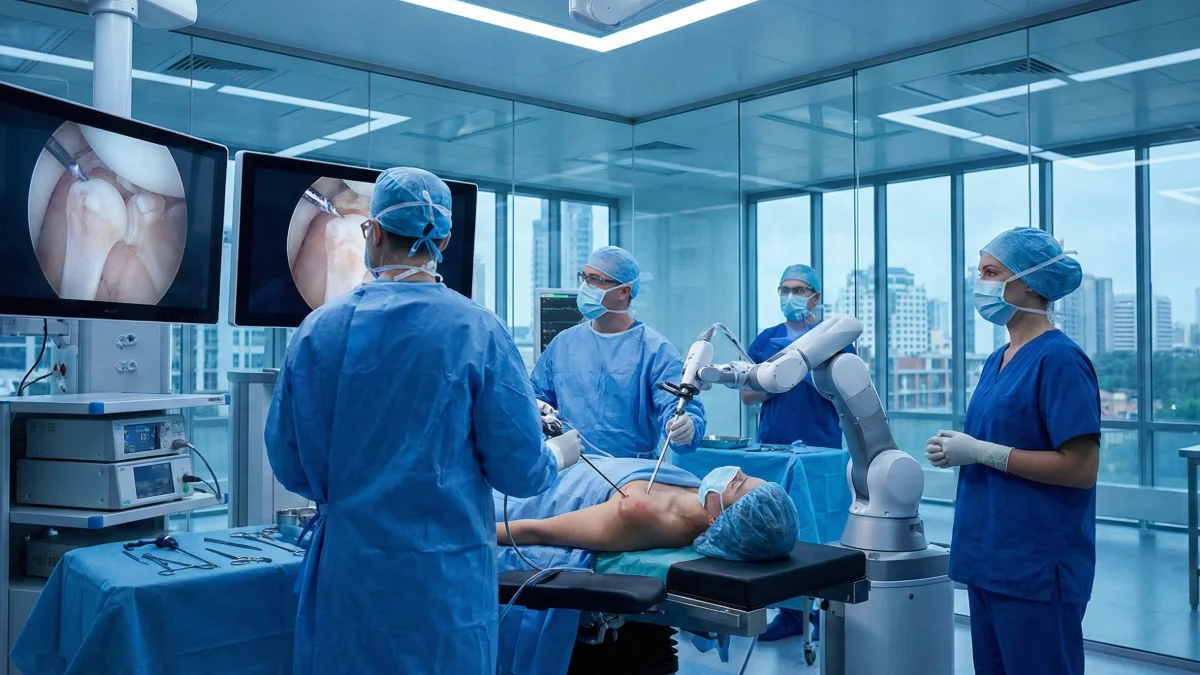
Shoulder arthroscopy has gained significant traction in Turkey, offering a successful and less invasive solution for chronic shoulder issues. The evolution of orthopedic surgery and imaging techniques has allowed shoulder arthroscopy to provide patients with modern approaches. These methods can pinpoint and address complex shoulder conditions while minimizing tissue damage and accelerating recovery. With a growing demand for specialized orthopedic care, the procedure is widely regarded as a safe option, supported by skilled surgeons and advanced medical facilities.
What Is Shoulder Arthroscopy in Turkey?
Shoulder arthroscopy is a minimally invasive surgical technique used to diagnose and address issues within the shoulder joint. In Turkey, this procedure employs an arthroscope—a slender camera inserted through a tiny incision. This camera provides real-time images of the joint, displayed on a monitor, allowing the surgeon to thoroughly assess the internal structures.
Surgeons perform shoulder arthroscopy through small incisions using specialized instruments, which minimizes soft tissue damage compared to open surgery. This method usually leads to less pain after surgery, smaller scars, and a faster return to normal activities.
Why is shoulder arthroscopy done?
Specialists in Turkey suggest shoulder arthroscopy when conservative treatments fail to resolve shoulder pain, weakness, or stiffness. These initial approaches might involve physiotherapy, anti-inflammatory drugs, injections, and simply resting the shoulder. If these methods don’t bring back normal shoulder function or ease the pain, shoulder arthroscopy provides a way for surgeons to pinpoint the problem and fix it all in one go.
Conditions Treated With Shoulder Arthroscopy in Turkey
Shoulder arthroscopy in Turkey provides a way to treat a range of shoulder issues, including:
- Rotator cuff tears and degeneration
- Biceps tendon injuries
- Labral tears, which can destabilize the shoulder
- Shoulder impingement and the formation of bone spurs
- Frozen shoulder (adhesive capsulitis)
- Shoulder instability and recurrent dislocations
- Joint alterations associated with osteoarthritis
- Chronic tendinitis and inflammation
The versatility of this surgery allows surgeons to customize treatment to fit each patient’s specific diagnosis.
How Common is Shoulder Arthroscopy?
Shoulder arthroscopy is a procedure that’s become quite routine in orthopedic surgeries globally. In Turkey, the approach reflects the established international standards and techniques, with rotator cuff repair being a particularly common arthroscopic shoulder surgery.
When Shoulder Arthroscopy Is Recommended
Surgeons perform shoulder arthroscopy when conservative treatments do not resolve ongoing pain or limited mobility. This surgical approach is especially beneficial for managing rotator cuff injuries, labral tears, and soft tissue damage within the shoulder joint.
Preparation Before Shoulder Arthroscopy in Turkey
Before undergoing shoulder arthroscopy in Turkey, patients receive a thorough medical assessment. This involves a careful look at their medical history, current medications, and any prior shoulder treatments. Your doctor may ask you to temporarily stop taking certain medications before the procedure.
Preoperative tests, like blood work, electrocardiograms, or chest imaging, might be necessary to confirm the patient’s suitability for surgery and anesthesia. The medical team provides clear instructions about fasting and preparation well ahead of time.
How Shoulder Arthroscopy in Turkey Is Performed
Shoulder arthroscopy in Turkey typically takes one to two hours. The surgeon determines the patient’s position—either semi-seated or lateral—based on the specific procedure and personal preference.
To improve visibility, the surgeon introduces sterile fluid into the shoulder joint. The surgeon then inserts the arthroscope through a small incision and displays the joint on a monitor. Using additional small incisions, the surgeon uses specialized instruments to repair damaged tissue, remove inflamed structures, or stabilize the joint as needed.
Aftercare Following Shoulder Arthroscopy in Turkey
In Turkey, surgeons commonly perform shoulder arthroscopy as a day-case procedure. After surgery, medical staff monitor patients in a recovery area and discharge them the same day. Before leaving the hospital, the care team clearly explains pain management, wound care, and movement restrictions.
How Painful is Shoulder Arthroscopy?
Some degree of pain is expected after shoulder arthroscopy in Turkey, but modern anesthetic techniques significantly reduce discomfort. Regional nerve blocks are frequently used alongside general anesthesia to control pain during and after the procedure. Pain generally subsides as the healing process advances, and it can be effectively addressed through the use of pharmacological agents and cryotherapy.
Advantages of Arthroscopic Shoulder Surgery
Shoulder arthroscopy presents a number of benefits when compared to open procedures:
Smaller incisions mean less scarring.
The risk of infection is lower.
Patients experience less postoperative pain and stiffness.
Hospital stays are shorter.
Rehabilitation and recovery are quicker.
These advantages make shoulder arthroscopy in Turkey an attractive choice for many individuals with appropriate shoulder issues.
Risks or Complications of Shoulder Arthroscopy
Shoulder arthroscopy in Turkey is considered very safe, but all surgical procedures carry some risk. Possible complications include infection, bleeding, blood clots, or injury to nearby nerves or blood vessels. Such complications are uncommon and are discussed in detail before surgery.
Recovery Time After Shoulder Arthroscopy
How quickly you can move again after a shoulder arthroscopy depends on how complicated the surgery was. Less complex repairs can facilitate a return to routine activities, whereas more involved procedures necessitate several months of rehabilitative therapy. Physiotherapy and prescribed exercises typically resolve swelling and stiffness.
Post-operative Care and Rehabilitation
Rehabilitation constitutes a crucial element in the successful application of shoulder arthroscopy in Turkey. Early implementation of movement exercises facilitates the restoration of range of motion, whereas structured physiotherapy programs are essential for rebuilding strength and stability. Consequently, consistent adherence to rehabilitation protocols demonstrably enhances long-term patient outcomes.
Going Back to Normal Activities
Post-operative recovery durations are influenced by individual rehabilitation rates and the specific nature of a patient’s occupational or recreational activities. Those engaged in desk-based employment may return to work relatively quickly, whereas those whose jobs involve manual labor or physical exertion typically require a more extended period of recovery. Furthermore, the resumption of driving should be postponed until sufficient strength, control, and comfort have been regained.
Conclusion
Shoulder arthroscopy in Istanbul presents a contemporary, less invasive option for those dealing with persistent shoulder pain and limited function. This approach, involving accurate diagnosis, meticulous surgical repair, and a well-planned rehabilitation program, allows many patients to find relief and restore their range of motion. Avicenna International Hospital utilizes cutting-edge arthroscopic technology, with procedures carried out by seasoned orthopedic specialists, guaranteeing both safety and positive results.
The cost varies by hospital and case complexity, but it is generally more affordable in Turkey than in many Western countries, often including surgery, hospital stay, and aftercare.
Yes. Turkey stands out as a leading medical tourism destination, offering internationally accredited hospitals and experienced surgeons, particularly in private medical centers.
For many patients, yes. Shoulder arthroscopy is minimally invasive, offers faster recovery, and effectively relieves pain and improves mobility when conservative treatments fail.