
People in Turkey are starting to use high tibial osteotomy more and more to treat knee pain caused by problems with alignment or early osteoarthritis. The goal of this process to save the joint is to fix the leg’s mechanical axis, move the weight across the knee, and take pressure off the hurt area. At Avicenna International Hospital, we use high tibial osteotomy as an alternative to joint replacement. It helps younger or more active people keep their original knees longer.
Understanding Knee Osteoarthritis and Malalignment
Knee osteoarthritis happens when the cartilage that protects the joint slowly wears away. This cartilage usually makes a smooth, shock-absorbing surface that lets the femur, tibia, and patella move without rubbing against each other. When degeneration happens, the joint hurts, is stiff, and swells.
For many patients, the problem is made worse by misalignment. When the leg bends inward (valgus alignment) or outward (varus alignment), the weight does not distribute evenly across the knee. One compartment takes on too much stress, while the other side stays pretty healthy. This imbalance speeds up the breakdown of cartilage, damage to the meniscus, and pain that gets worse over time.
Some common signs are:
- Pain that is only on one side of the knee
- Having a hard time standing or walking for a long time
- Swelling or tightness
- Changes in the way the legs are lined up that can be seen
High tibial osteotomy fixes this mechanical problem by fixing the alignment instead of replacing the joint.
What Is a High Tibial Osteotomy?
A high tibial osteotomy is a type of surgery that involves carefully cutting and moving the upper part of the tibia (shin bone) to change how the knee is aligned. The surgeon moves the weight of the body from the damaged compartment to the healthier side by changing the angle of the bone.The procedure usually includes:
Careful planning with full-length standing X-rays to check the leg’s mechanical axis.- An incision in the upper tibia.
To achieve the desired alignment, either create a wedge-shaped gap or remove a small bit of bone.
Using a metal plate and screws to hold the bone in place until it heals.
To check the health of the cartilage and meniscus, a minimally invasive arthroscopy is often done first.
Purpose and Expected Outcomes
The main goal of high tibial osteotomy is to take the pressure off the damaged part of the knee. The goal of the procedure is to move weight around so that it:
- Ease pain while walking and doing everyday things
- Make your knees work better and stay stable
- Fix problems like bow legs or knock knees
- Slow down the progress of osteoarthritis
- Postpone or evade total knee replacement
Even though the procedure doesn’t completely fix the knee, many patients feel a lot better for eight to ten years or more.
Who Is a Suitable Candidate for High Tibial Osteotomy in Turkey?
Doctors usually only recommend high tibial osteotomy for people who meet certain clinical criteria. The best candidates are often:
- Adults in their twenties or thirties, usually under 50
- People who are active and want to keep their natural joints
- People with osteoarthritis that only affects one knee compartment
- People who have healthy blood vessels and bones
- Patients who can stick to a structured rehabilitation program
People with the following conditions are less likely to benefit from the procedure:
- Arthritis that causes swelling
- Very stiff joints or knees that don’t move very well
- Damage that affects more than one compartment
- A lot of ligament instability
- Obesity that has gotten worse
A careful assessment before surgery makes sure the procedure is right and likely to give long-lasting results.
Types of High Tibial Osteotomy Techniques
Depending on the patient’s body type and the type of deformity, orthopedic surgeons use a number of different methods.
Osteotomy with a medial opening wedge
The surgeon makes a controlled cut in the tibia and opens a wedge on the inside of the bone using this method. A plate holds the gap in place so that new bone can slowly grow. This method helps keep the tibia’s natural slope and stays away from structures like the peroneal nerve.
Osteotomy of the lateral closing wedge
In this case, a small piece of bone is taken out of the outside of the tibia. The edges of the remaining bone are brought together and held in place with internal hardware. This method is naturally stable and may help you bear weight more quickly during rehab.
Osteotomy of the dome or rotation
A curved cut is made around the middle of the deformity, which allows the bone be rotated into the right position. This method keeps the leg’s anatomical axis and reduces shortening.
High Tibial Osteotomy vs Knee Replacement
Knee replacement works well for people with severe joint damage, but it might not be the best option for younger or more active people. Over time, artificial joints may need to be replaced through revision surgery.
High tibial osteotomy, on the other hand:
- Keeps the patient’s natural knee structures intact
- Keeps the joint feeling more natural
- Lets you do some physical activities again
- Puts off the need for a prosthetic joint replacement
For a lot of patients, it is a way to protect their joints rather than a final solution.
The Surgical Process
High tibial osteotomy is a big orthopedic surgery that usually takes one to two hours. It is done under general anesthesia, and sometimes a spinal block is used to help with pain after the surgery.
The normal way for surgery to go is:
- Imaging and planning before the surgery
- If needed, an arthroscopic look at the knee
- Exact cuts in the bone to fix the alignment
- Using screws and a metal plate to hold things together
- A short stay in the hospital, usually one to two nights
The goal is to get the realignment right while keeping the joints stable.
Recovery and Rehabilitation
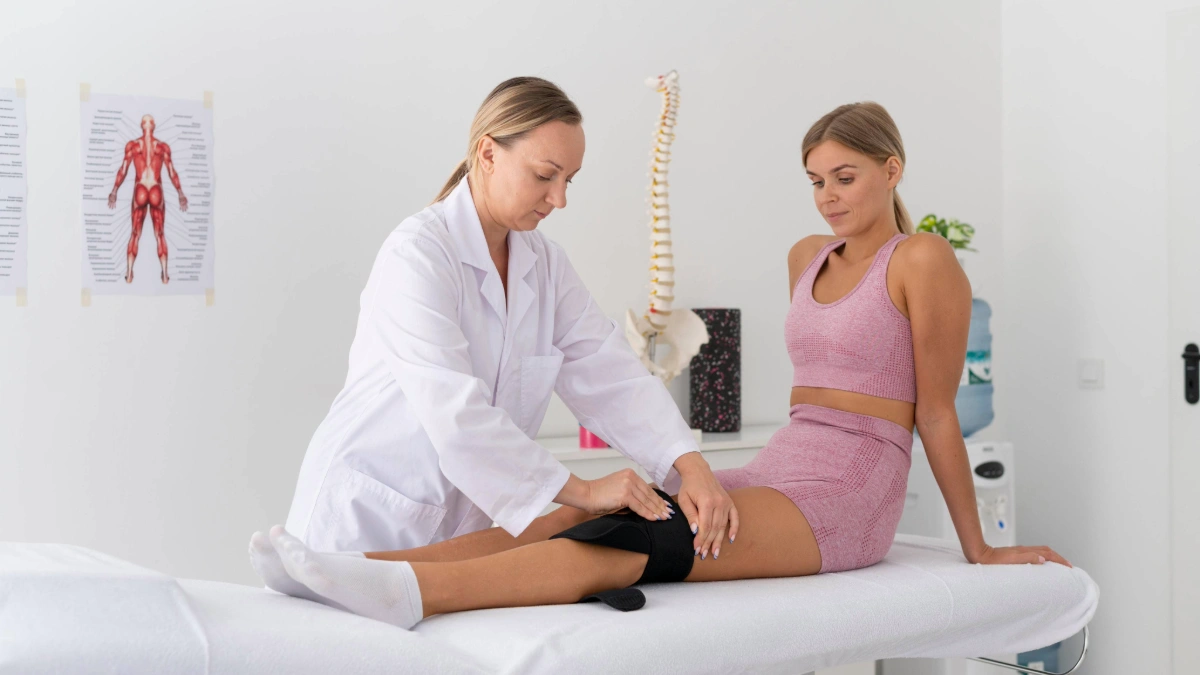
It takes time to recover from high tibial osteotomy, and you have to be committed to physiotherapy. The healing process usually goes through these steps:
First few weeks
- Using crutches or putting some weight on your feet
- Control of pain and swelling
- Exercises to help you move around early
Weeks 6 to 12 - Weight-bearing that gets harder over time
- Exercises to build strength and range of motion
- Slowly getting back to daily tasks
Three to six months - Ongoing physical therapy
- Go back to light sports or exercise for fun
Most patients get better within six months, but it may take longer for the bones to fully heal.
Risks and Potential Complications
High tibial osteotomy, like any major orthopedic surgery, has some risks. These could be:
- Getting irritated by the metal plate, which may need to be taken off sometimes
Serious problems are rare, and most patients see a big improvement in their pain and ability to move.- Healing of bones that takes longer than normal or doesn’t happen at all
- An infection or blood clots
- Damage to a nerve or blood vessel
Stiffness or swelling that won’t go away
Cost of High Tibial Osteotomy in Turkey
In Turkey, the average cost of high tibial osteotomy is between $6,500 and $12,000. The final price will depend on a number of clinical and logistical factors:
• How bad the damage to the knee is
• The kind of surgery that was done
- How long the surgeon has been doing this
- The hospital’s location and amenities
- Imaging and lab tests before surgery
- Time for anesthesia and surgery
- Physiotherapy and follow-up care after surgery
- Mobility aids or braces to help with recovery
Turkey is a competitive choice for international patients because of its wide range of prices, which often include consultations, surgery, and initial rehabilitation.
Conclusion
High tibial osteotomy is still a good way to protect the joint for people with knee malalignment and early osteoarthritis. The procedure relieves pressure on the damaged compartment by fixing the leg’s mechanical axis. This helps keep the knee working normally for many years.
High tibial osteotomy in Turkey is done at Avicenna International Hospital as part of a multidisciplinary approach that includes accurate diagnosis, cutting-edge surgical methods, and planned rehabilitation. This integrated approach lets patients get effective, evidence-based care while also taking advantage of the country’s long history of providing good orthopedic care.
Most patients start to put some weight on their legs within a few weeks and finish structured physiotherapy in six to twelve weeks. It usually takes three to six months for a person to fully recover their function, but this can vary from case to case.
High tibial osteotomy can keep the natural joint and put off knee replacement for younger or more active patients whose damage is limited to one compartment. Most of the time, knee replacement is only done when the joint has gotten worse or spread to other parts of the body.
Depending on the hospital, the surgeon’s experience, the type of surgery, and how complicated the patient’s condition is, the procedure usually costs between $6,500 and $12,000.