
To get facial harmony, you need to do more than just improve one feature. The distance between the nose and chin is crucial for how balanced and proportionate the face looks, especially from the side. This is why more and more people choose combining rhinoplasty and chin surgery done together in Turkey. This is a great way for patients to improve the overall symmetry of their faces in one carefully planned procedure.
Why Patients Choose Combined Nose and Chin Procedures
People who have modern facial cosmetic surgery don’t usually focus on just one feature. The nose and chin work together as a visual unit, so if one is out of balance, the other is likely to look different.
For instance, a chin that is set back or under-projected can make the nose look bigger than it is. On the other hand, a well-defined chin can make the nose look less prominent. This interdependence elucidates the rationale behind the recommendation for chin enhancement to numerous patients pursuing rhinoplasty.
Some of the main reasons are:
- Enhancing facial symmetry and proportions
- Making it less likely that more than one surgery will be needed
- Getting results that are more natural and in harmony
- Reducing the amount of time spent on downtime and recovery
Combining procedures isn’t just about making things easier; it’s also about getting a result that fits with the natural shape of the face.
Aesthetic Planning for Harmonious Facial Results
Careful planning is key to getting good results from combined facial surgery. We start with a thorough analysis of the face, looking at proportions, symmetry, and how each feature works with the others.
Individualized Evaluation and Proportional Equilibrium
We look at:
- The shape and projection of the nose
- Position of the chin and definition of the jawline
- The quality of the skin and the shape of the face
- Overall facial proportions, which are often based on classical ideas of beauty
This makes sure that any changes look natural and don’t seem too much or fake.
Advanced Imaging and Surgical Strategy
Modern 3D imaging technology lets patients see what might happen before surgery. This makes it easier to talk to each other and helps set realistic goals.
In most cases, both procedures are done in one session while the patient is asleep. The surgical plan is carefully made to keep safety, efficiency, and accuracy in mind, and it usually keeps the time spent in the operating room within safe limits.
Benefits, Safety, and Long-Term Outcomes
When done by a skilled surgical team, combining rhinoplasty and chin surgery in Turkey has many clinical and practical benefits.
Benefits
- Better harmony in the face: Making changes at the same time makes the profile more balanced.
- Single recovery period: Patients heal from both procedures at the same time
- Cost-effectiveness: Lower costs for hospitals and anesthesia
- A smoother treatment process with fewer consultations and follow-ups
Safety Considerations
At every stage of treatment, safety is still essential. Before surgery, thorough evaluations help find any medical risks. Strict rules for surgery help avoid problems like infections, bleeding, or issues with anesthesia.
When done by experienced specialists, combining procedures does make the surgery take a little longer, but for the right people, the overall risk stays low.
How long do the results last?
Rhinoplasty and chin augmentation usually last a long time, and in some cases, they last forever. Even though people naturally age, the structural changes to the nose and chin stay the same over time.
Patient Profiles, Satisfaction, and Psychological Impact
People who choose to have more than one facial procedure usually have a lot in common. A lot of them are young adults who want to improve their facial proportions and boost their self-esteem.
Expectations and Satisfaction
People often say they are very happy, especially when:
- Your hopes are realistic
- Planning for the surgery is very detailed
- There is clear communication between the patient and the surgeon.
Patients often say that they feel better about themselves and their social skills, as well as how they look.
Psychological Factors
A thorough psychological evaluation is essential. People who have unrealistic expectations or conditions like body dysmorphic disorder may not benefit from surgery. In these situations, we prioritize other types of help.
Modern Techniques and Emerging Trends
Facial cosmetic surgery continues to evolve, with a growing emphasis on precision and natural outcomes.
Minimally Invasive and Hybrid Approaches
Surgeons increasingly combine traditional surgical techniques with less invasive treatments, such as:
- Dermal fillers for contour refinement
- Fat grafting for subtle volume enhancement
These approaches allow for fine-tuning without extensive intervention.
New Trends and Modern Techniques
Facial cosmetic surgery is always changing, and there is a growing focus on getting results that look natural and are accurate.
Approaches that are minimally invasive and hybrid
Surgeons are increasingly integrating conventional surgical methods with minimally invasive therapies, including:
- Dermal fillers to improve the shape of the skin
- Fat grafting to add a little volume
These methods let you make small changes without having to do a lot of work.
Improvements in technology
Digital imaging and simulation tools have revolutionized the creation of treatment plans. Patients are now more involved in making decisions and have more information, which makes them happier.
Patients now know more and have a bigger say in decisions, which makes them happier.
Change to minor improvement
These days, people prefer results that are subtle and natural-looking over big changes. The goal is to keep people’s unique traits while making existing ones better.
Understanding the Procedures in Detail
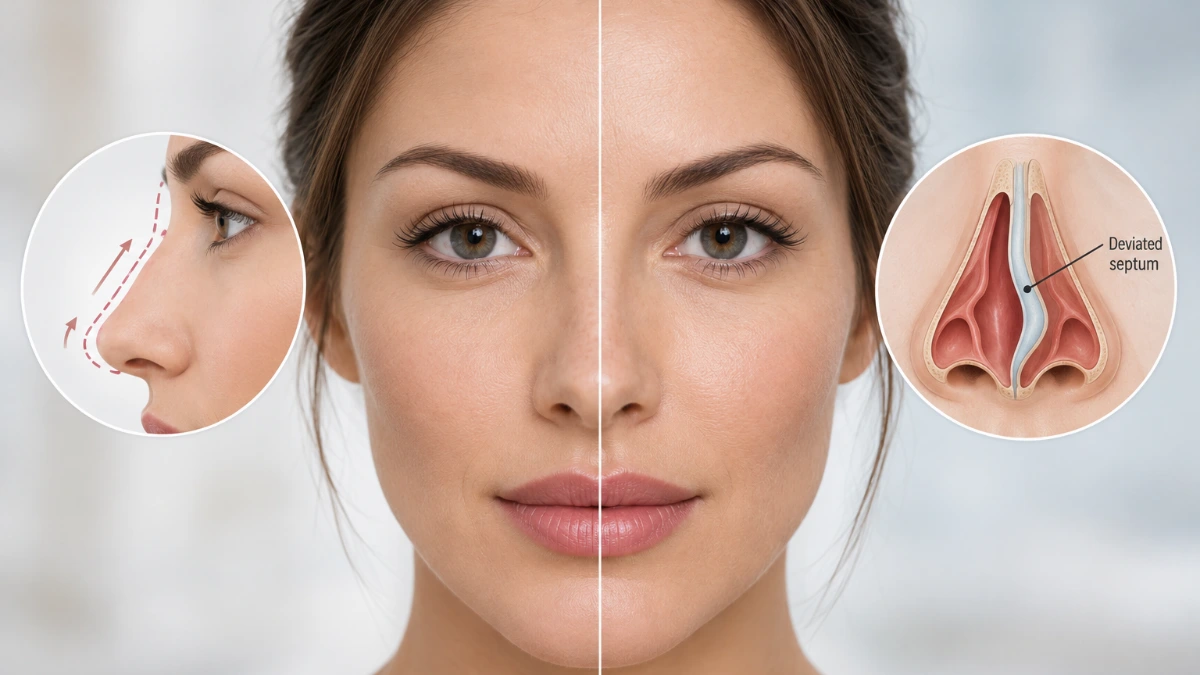
Rhinoplasty
Rhinoplasty fixes both cosmetic and functional problems. It can:
- Change the shape or size of the nasal bridge
- Improve the tip of the nose
- Change the width of the nostrils
- Make breathing easier when needed
Depending on how complicated the case is, surgery may use open or closed methods.
Chin Surgery
You can make your chin bigger by:
- Chin implants: Usually made of medical-grade silicone
- Sliding genioplasty: Moving the patient’s own bone to a new location
Both methods aim to make the jawline more defined and the projection better, which will make the face look more balanced.
The Surgical Process and Recovery Timeline
During Surgery
Most of the time, the combined procedure is done under general anesthesia and takes about 2 to 4 hours. Rhinoplasty is usually done first, and then chin enhancement is done.
Experience of Recovery
Patients can look forward to:
• Swelling and bruising in the first week
- A nasal splint and maybe some dressings for the chin
- Mild pain that can be treated with medicine
Most people go back to light activities within 7 to 10 days, but some swelling may last for a few months.
Final Outcomes
You can see some improvements right away, but it may take up to a year for the full results to settle, especially for rhinoplasty. Results for the chin tend to stay the same more quickly.
Risks and Considerations
There are risks involved with any surgery, such as:
- Getting sick or bleeding
- • Numbness that lasts for a short time
- Trouble breathing (in cases of rhinoplasty)
- Problems with implants, like displacement
When done correctly, combining procedures doesn’t significantly raise the risk, but it’s still important to choose patients carefully.
Conclusion
Combining rhinoplasty and chin surgery in Turkey is a way to improve the look of the face. It gives balanced, natural results in one well-planned procedure. Patients can look better and feel better overall by fixing the structural connection between their nose and chin. Such an approach also means a shorter recovery time.
At Avicenna International Hospital, we focus on personalized planning, modern methods, and patient-centered care to make sure that every treatment meets both medical safety and aesthetic goals. This approach lets us give results that are not only beautiful but also long-lasting and in proportion.
For the right people, doing both procedures at the same time is often more effective. This approach ensures a single recovery period and considers the overall proportions of the face rather than treating them in stages.
Most people go back to their normal daily activities in 7 to 10 days. But swelling, especially in the nose, can take a few months to go away completely.
Yes, the changes to the structure that both procedures make usually last for a long time. As people get older, their facial balance stays the same, even as they get older.