

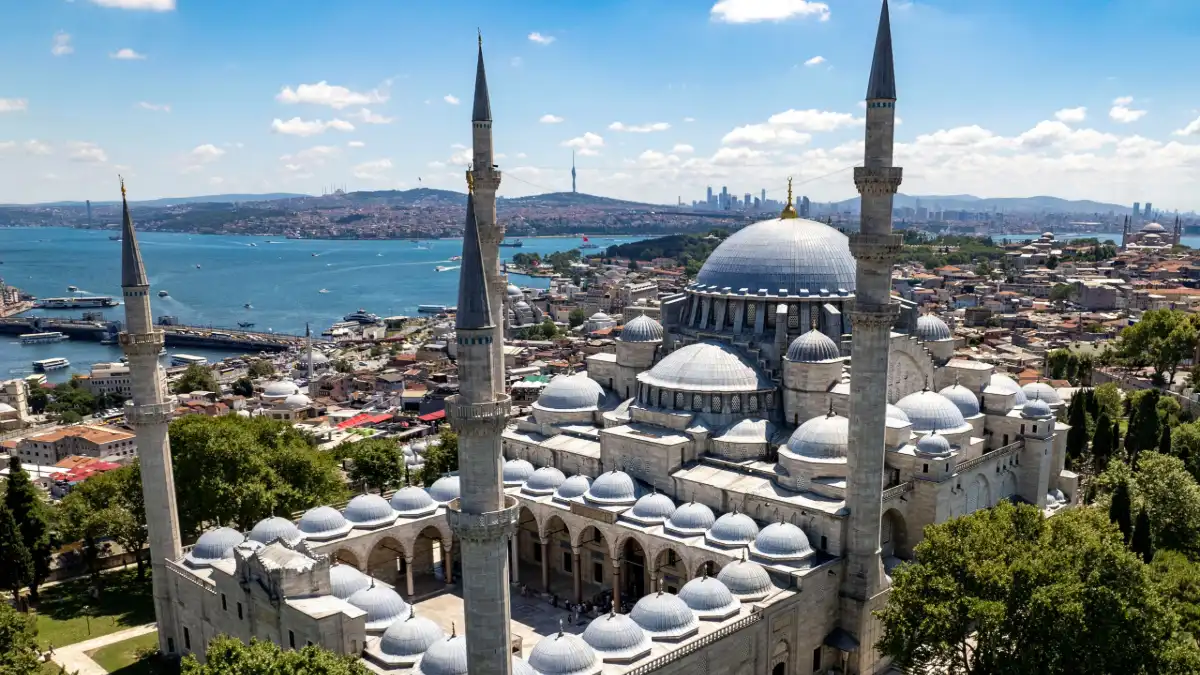
The Süleymaniye Mosque is one of Istanbul’s most defining landmarks, yet it offers something many major attractions do not: space, calm, and clarity. Rising above the historic peninsula, it combines architectural brilliance with a quiet atmosphere that feels particularly restorative—an experience many international visitors value during a medical stay in the city.
What is the Süleymaniye Mosque?
The Süleymaniye Mosque is a grand imperial mosque built in the 16th century under the direction of Suleiman the Magnificent and designed by the renowned architect Mimar Sinan. Completed in 1557, it represents the height of Ottoman architectural achievement.
What sets it apart is not only its scale but also its intention. It was designed as both a place of worship and a centre of social life, reflecting a period when architecture served communities in a deeply integrated way.
Which Empire Built the Süleymaniye Mosque?
The Süleymaniye Mosque was built during the Ottoman Empire’s most powerful and culturally refined era. It reflects a time when Istanbul was not only a political capital but also a center of learning, medicine, and art.
Rather than standing in isolation, the mosque was conceived as part of a broader system that supported daily life. This makes it especially meaningful when viewed through a modern lens of wellbeing and community care.
What Makes the Architecture of Süleymaniye Mosque Unique?
The Süleymaniye Mosque is known for its balance, proportion, and structural intelligence. It draws subtle inspiration from earlier Byzantine architecture, particularly Hagia Sophia, while refining those ideas into a distinctly Ottoman form.
Key features include:
- A vast central dome that creates a sense of openness without overwhelming the visitor
- Supporting semi-domes that distribute weight and enhance visual flow
- Four elegant minarets, marking its imperial status
- Carefully positioned windows that soften natural light across the interior
Inside, the atmosphere is notably gentle. Light filters in rather than floods the space, and the scale feels balanced rather than imposing. This contributes to a sense of calm that many visitors find unexpectedly grounding.
What is the Süleymaniye Mosque Complex (külliye)?
The mosque is part of a larger külliye, or social complex, designed to serve the wider population.
Historically, this included:
- A hospital providing medical treatment
- A medrese (educational institution)
- A public kitchen offering meals
- A library and learning spaces
- Accommodation for travellers
This integrated design reflects an early model of community well-being—where healthcare, education, and spirituality were interconnected. For today’s international patients, this aspect often resonates strongly.
How has the Süleymaniye Mosque Changed Over Time?
The Süleymaniye Mosque has experienced periods of damage and restoration, yet its core identity remains intact.
Over the centuries:
- Fires caused structural and decorative damage
- Later restorations introduced stylistic changes
- Wartime use led to further deterioration
- A major restoration in the 20th century preserved its original character
These historical layers do not diminish the experience. Instead, they add depth, reminding visitors that the building has endured alongside the city itself.
Is the Süleymaniye Mosque Bigger than the Blue Mosque?
Yes, the Süleymaniye Mosque is larger in scale than the Blue Mosque, though each offers a different experience.
The Blue Mosque is more centrally located and visually ornate, while Süleymaniye feels more spacious and understated. Visitors often notice that Süleymaniye allows for a slower, more reflective visit, away from the busiest tourist flows.
What Can You See from the Süleymaniye Mosque Terrace?
The terrace offers wide, uninterrupted views across Istanbul, including the Golden Horn and the Bosphorus.
This vantage point provides:
- A sense of the city’s scale and geography
- Quiet corners for sitting and observing
- A particularly beautiful setting at sunset
For those recovering from treatment, it offers a gentle way to experience Istanbul without physical strain.
Süleymaniye Mosque Opening Hours and Visiting Tips
The mosque is open daily, typically from morning until early evening, with temporary closures during prayer times.
Before visiting, it helps to know:
- Entry is free, with optional donations
- Modest clothing is required
- Shoes must be removed inside
- Quiet behaviour is expected, especially during prayer
Visiting in the morning or later in the afternoon usually provides the most relaxed experience.
What Can You Explore Nearby?
The mosque is within walking distance of several important sites:
- Grand Bazaar
- Spice Bazaar
- Topkapi Palace
The surrounding streets are also known for traditional Turkish dishes, offering simple and comforting meals in a local setting.
Why visit Süleymaniye Mosque During a Medical Trip?
The Süleymaniye Mosque is worth visiting because it combines cultural depth with a calm, restorative environment.
For international patients, this means:
- A peaceful setting that supports emotional well-being
- Open spaces that allow gentle movement
- A quieter alternative to more crowded attractions
These qualities make it particularly suitable for those balancing recovery with light exploration.
Conclusion
The Süleymaniye Mosque reflects a vision of architecture that goes beyond aesthetics. It represents a time when cities were designed with human well-being in mind—when spiritual, physical, and social needs were considered together.
Today, Istanbul continues this balance in a modern context. Institutions such as Avicenna International Hospital provide advanced medical care for international patients, while the city itself offers meaningful cultural experiences that support recovery. A visit to Süleymaniye is one of those moments where history, space, and calm come together in a way that feels genuinely restorative.
Yes, the Süleymaniye Mosque is free to enter. Visitors are welcome without purchasing a ticket, although donations are appreciated.
Yes, the Süleymaniye Mosque is absolutely worth visiting. It offers a quieter, more spacious experience compared to other major landmarks, with impressive architecture and panoramic views.
The Süleymaniye Mosque is an Islamic place of worship. It remains active today, hosting daily prayers and serving the local community.