

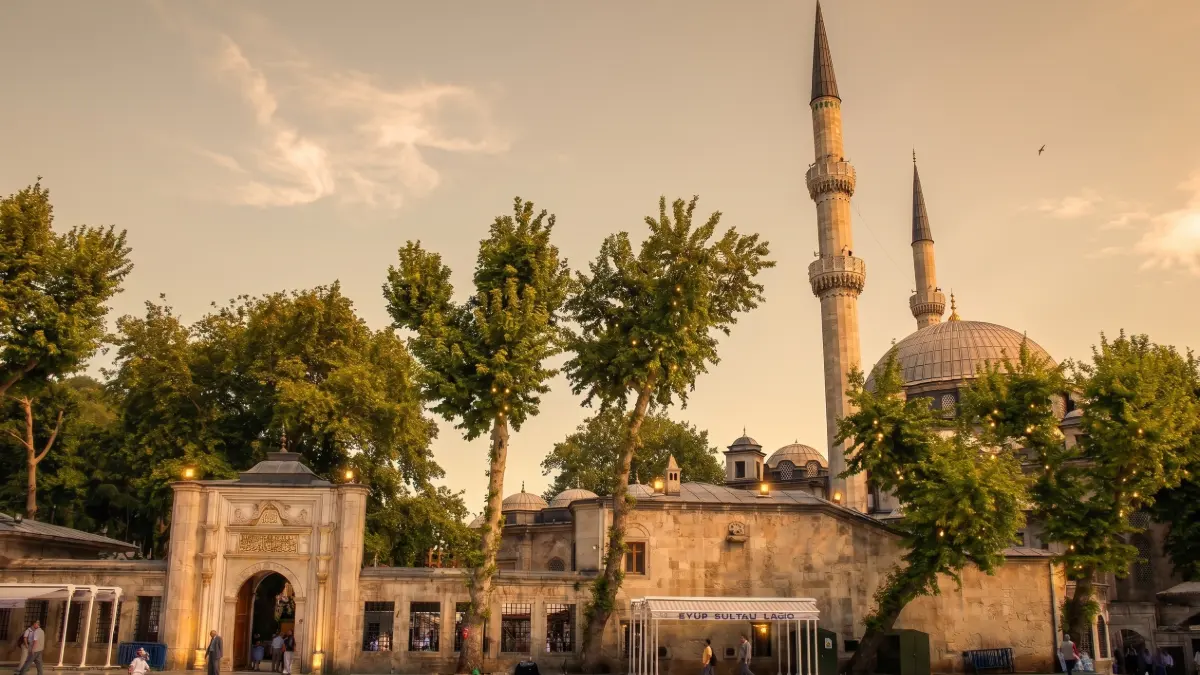
The Eyüp Sultan Mosque is one of the most important religious sites in Istanbul and a place that holds deep significance for Muslims around the world. Located on the shores of the Golden Horn in the historic Eyüpsultan district, the mosque combines centuries of Ottoman history, remarkable architecture, and a peaceful atmosphere that continues to attract worshippers, pilgrims, and visitors alike.
For international travelers visiting Istanbul, the mosque offers much more than a sightseeing experience. It provides a unique opportunity to understand the city’s spiritual heritage while enjoying one of the most authentic neighborhoods in Istanbul.
What Is the Significance of Eyüp Sultan Mosque?
Eyüp Sultan Mosque is one of the holiest Islamic sites in Türkiye because it houses the tomb of Abu Ayyub al-Ansari, a close companion of Prophet Muhammad.
Known in Turkish as Ebu Eyüp el-Ensari, Abu Ayyub al-Ansari participated in the first Arab siege of Constantinople during the 7th century and died near the city walls. His burial place later became a site of great religious importance.
Following the Ottoman conquest of Constantinople in 1453, Sultan Mehmed II ordered the construction of a mosque at the site. Since then, the mosque has remained a center of worship, pilgrimage, and Islamic tradition.
For centuries, Ottoman sultans visited the mosque for the symbolic Sword of Osman ceremony, which marked the beginning of their reign. This tradition further strengthened the mosque’s place in Ottoman political and religious life.
The History of Eyüp Sultan Mosque
Eyüp Sultan Mosque was the first imperial mosque built after the Ottoman conquest of Istanbul.
Construction began in 1458 under the orders of Sultan Mehmed the Conqueror. The original structure stood as a symbol of the new Ottoman capital and quickly became one of the city’s most respected religious institutions.
A devastating earthquake in 1766 severely damaged the mosque. Although repairs were attempted, the structure eventually had to be rebuilt almost entirely. The present mosque was completed in 1800 during the reign of Sultan Selim III.
Today, visitors can admire a fascinating blend of classical Ottoman design and Ottoman Baroque influences that reflect the architectural trends of the late eighteenth century.
Who Is Buried at Eyüp Sultan Mosque?
The tomb of Abu Ayyub al-Ansari is located within the Eyüp Sultan Mosque complex.
His mausoleum stands directly beside the mosque and is considered one of the most visited pilgrimage sites in Istanbul. Many visitors come specifically to pay their respects, offer prayers, and experience the spiritual atmosphere surrounding the tomb.
The beautifully decorated mausoleum contains remarkable examples of Ottoman craftsmanship, including elegant calligraphy, silver ornamentation, and historic Iznik tiles. The site continues to hold immense religious significance for Muslims from Türkiye and abroad.
What Can You See Inside Eyüp Sultan Mosque?
The interior of the mosque reflects centuries of Ottoman artistic tradition.
A magnificent central dome measuring approximately 17.5 meters in diameter dominates the prayer hall. Elegant arches, decorative calligraphy, and ornate details create a calm and inspiring environment for worship.
Natural light enters through large windows, highlighting the delicate interior decoration and creating a peaceful atmosphere throughout the day.
Visitors often notice:
- The impressive central dome
- Ottoman Baroque decorative elements
- Historic calligraphic inscriptions
- Traditional prayer areas
- Beautiful chandeliers and lighting features
Despite receiving large numbers of visitors, the mosque maintains a sense of tranquility that distinguishes it from many other tourist attractions in Istanbul.
Exploring the Eyüp Sultan Tomb
The Eyüp Sultan Tomb is often considered the spiritual center of the entire complex.
The tomb attracts visitors from around the world who come to reflect, pray, and learn about Islamic history. The interior features exquisite tile work from different periods of Ottoman history, creating a visually rich and meaningful space.
The mausoleum generally welcomes visitors during specific opening hours, usually between 09:30 and 16:30 from Tuesday to Sunday, although schedules may occasionally change.
Many visitors describe the tomb as one of the most moving religious experiences in Istanbul.
Eyüp Cemetery and the Legacy of Ottoman Istanbul
Behind the mosque lies the historic Eyüp Cemetery, one of the most atmospheric cemeteries in the city.
The hillside cemetery contains the graves of Ottoman scholars, military commanders, poets, statesmen, and members of prominent families. Walking through the shaded pathways provides a fascinating glimpse into centuries of Ottoman history.
Ancient cypress trees, intricate gravestones, and panoramic views create a peaceful setting that feels far removed from the busy streets of central Istanbul.
For visitors interested in history, culture, and architecture, the cemetery is an essential part of the Eyüpsultan experience.
What Is the Eyüp Sultan Mosque Cable Car?
The Eyüp Sultan Mosque cable car provides one of the most scenic experiences in the area.
Located near the mosque, the Eyüpsultan Teleferik transports visitors up the hillside to the famous Pierre Loti Hill within minutes.
The short ride offers spectacular views across the Golden Horn and the surrounding historic districts.
Many visitors choose to ride the cable car uphill and then walk back down through the cemetery to the mosque, creating a memorable and enjoyable route through one of Istanbul’s most historic neighborhoods.
Pierre Loti Hill: The Best View Near Eyüp Sultan Mosque
Pierre Loti Hill is one of the most popular viewpoints in Istanbul.
Named after the French writer Pierre Loti, who often visited the area, the hill offers breathtaking panoramic views of the Golden Horn, historic mosques, and the city’s skyline.
The traditional café at the summit remains a favorite place to enjoy Turkish tea or coffee while watching the sunset over Istanbul.
For international visitors recovering from medical treatment, Pierre Loti Hill can provide a relaxing and gentle excursion away from the busier tourist areas.
How to Get to Eyüp Sultan Mosque from Sultanahmet
Getting to Eyüp Sultan Mosque from Sultanahmet is simple using Istanbul’s public transport system.
The most convenient options include:
- Taking the T5 tram line from Eminönü towards Eyüpsultan
- Using local buses connecting the historic centre with Eyüpsultan
- Taking a taxi directly from Sultanahmet
- Travelling by ferry along the Golden Horn and continuing by tram or bus
The journey typically takes between 25 and 40 minutes depending on traffic and the chosen route.
Eyup Sultan Mosque Opening Hours and Visitor Information
The mosque itself remains open throughout the day for worship.
Visitors should remember that tourist access may be limited during the five daily prayer times. Planning a visit between prayers generally provides the best experience.
There is no entrance fee to enter the mosque or its courtyard.
Before entering, visitors should observe the dress code:
- Shoulders and knees should be covered
- Women should wear a headscarf
- Shoes must be removed before entering prayer areas
- Respectful behaviour should be maintained throughout the visit
Photography is usually permitted outside prayer times, although visitors should always remain considerate of worshippers.
Why International Visitors Include Eyüp Sultan Mosque in Their Istanbul Experience
Eyüp Sultan Mosque offers a unique combination of spirituality, history, architecture, and local culture.
Unlike some of Istanbul’s busier landmarks, the area retains an authentic atmosphere where visitors can experience everyday life alongside centuries-old traditions. The nearby cafés, historic streets, local markets, and waterfront views make the district particularly rewarding for travelers who wish to explore beyond the city’s most famous attractions.
For health tourists spending time in Istanbul, the peaceful surroundings and cultural richness of Eyüpsultan can provide a meaningful addition to their visit.
Conclusion
Eyüp Sultan Mosque remains one of Istanbul’s most treasured religious landmarks. From the sacred tomb of Abu Ayyub al-Ansari and the historic Ottoman cemetery to the panoramic views from Pierre Loti Hill, the area offers a remarkable blend of faith, history, and culture. Whether you are interested in Islamic heritage, Ottoman architecture, or simply experiencing a quieter side of Istanbul, Eyüpsultan deserves a place on your itinerary.
Choosing the right treatment starts with access to accurate information and experienced medical professionals. At Avicenna International Hospital, we support international patients with personalized healthcare in Turkey.
Eyüp Sultan Mosque was originally commissioned by Sultan Mehmed the Conqueror in 1458 after the Ottoman conquest of Constantinople. The current structure was rebuilt in 1800 during the reign of Sultan Selim III.
The tomb of Abu Ayyub al-Ansari is located within the Eyüp Sultan Mosque complex in the Eyüpsultan district on the Golden Horn in Istanbul.
Yes, entry to Eyüp Sultan Mosque is free. Visitors can enter the mosque and courtyard without charge, although donations are welcomed and visitors should follow the mosque’s dress code and visitor guidelines.