

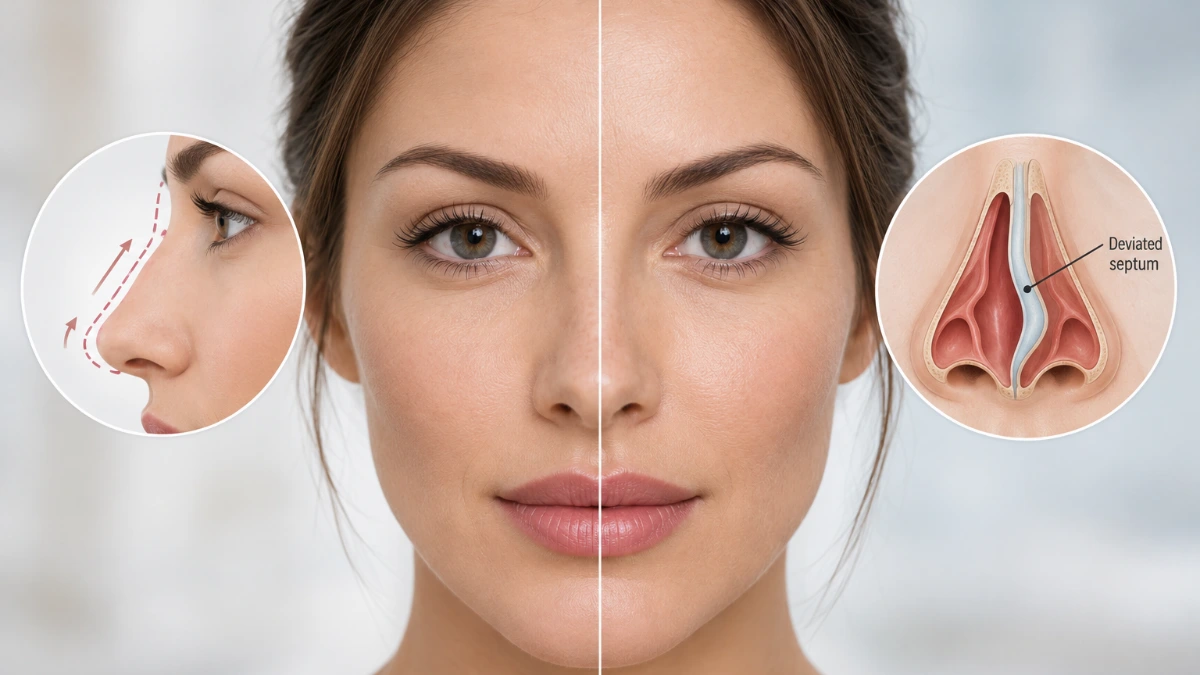
Rhinoplasty and septoplasty are both operations involving the nose, but they are performed for different reasons.
Rhinoplasty changes the shape or structure of the nose and may be performed for aesthetic, functional or combined reasons. Septoplasty focuses on the nasal septum, the internal wall separating the two nasal passages, and is mainly used when septal deviation contributes to breathing problems.
Some patients need both external and internal correction. In these cases, rhinoplasty and septoplasty may be combined in an operation called septorhinoplasty.
The right procedure depends on whether the main concern involves nasal appearance, breathing, internal structure or a combination of these factors.
What Is Rhinoplasty?
Rhinoplasty is surgery that changes the shape or structure of the nose. Depending on the reason for surgery, it may address appearance, function or both.
Depending on the patient’s anatomy and goals, surgery may involve the nasal bones, cartilage, bridge, tip, nostrils or several of these areas together.
Patients may consider rhinoplasty for concerns such as:
- A dorsal hump
- A wide or narrow nasal bridge
- A bulbous or poorly defined nasal tip
- Nasal asymmetry
- A visibly crooked nose
- Changes after nasal trauma
- A previous rhinoplasty result requiring revision
Although rhinoplasty is often associated with cosmetic surgery, it is not always performed for appearance alone. Structural changes can also influence nasal airflow, so functional issues may need to be considered during planning.
What Is Septoplasty?
Septoplasty is surgery performed on the nasal septum.
The septum is formed by cartilage and bone and separates the right and left sides of the nasal cavity. When it is significantly displaced from the midline, it can narrow one or both nasal passages and contribute to difficulty breathing through the nose.
During septoplasty, selected areas of cartilage or bone may be repositioned, reshaped or removed to improve the nasal airway.
Unlike cosmetic rhinoplasty, septoplasty is not primarily intended to change the external appearance of the nose.
Rhinoplasty vs Septoplasty: Key Differences
| Factor | Rhinoplasty | Septoplasty |
|---|---|---|
| Main area treated | External and structural nose | Nasal septum |
| Main purpose | Shape, proportion, structure and sometimes function | Correct problems caused by septal deviation |
| Can change appearance? | Yes | Usually not the main purpose |
| Can improve breathing? | Sometimes, depending on the cause | Yes, when septal deviation contributes to obstruction |
| Treats a deviated septum? | Not necessarily | Yes |
| Can be combined with the other procedure? | Yes | Yes |
| Combined procedure | Septorhinoplasty | Septorhinoplasty |
This distinction is especially important for patients who have concerns about both nasal appearance and breathing.
What Is a Deviated Septum?
A deviated septum means that the wall separating the nasal passages is displaced away from the midline.
Some people are born with a septal deviation, while in others it develops or becomes more pronounced after trauma.
A deviated septum does not always cause symptoms. When it does, possible problems include reduced airflow through one side of the nose, persistent nasal blockage or difficulty breathing through the nose.
Other nasal conditions can produce similar symptoms, so nasal obstruction should not automatically be attributed to the septum.
Does a Deviated Septum Always Need Surgery?
No.
Many people have some degree of septal deviation without significant symptoms.
Septoplasty is generally considered when the deviation contributes to meaningful nasal obstruction or other functional problems and surgery is considered appropriate after clinical assessment.
The decision is based on symptoms and examination rather than simply whether the septum appears slightly off-centre.
Can Rhinoplasty Fix a Deviated Septum?
Not automatically.
Cosmetic rhinoplasty and septoplasty treat different structures and have different primary goals.
If a patient also has septal deviation that requires correction, septoplasty may be incorporated into the rhinoplasty operation. When external nasal reshaping and septal correction are performed together, the procedure is known as septorhinoplasty.
Patients considering rhinoplasty should therefore mention any breathing problems during consultation rather than treating appearance and nasal function as separate issues.
Can Septoplasty Change the Shape of Your Nose?
Septoplasty is not primarily intended to change the external appearance of the nose.
Its main purpose is to correct the internal septum.
However, the septum forms part of the supporting structure of the nose. In some patients, a substantial septal deformity is associated with external deviation or other structural changes.
If the external nose also requires correction, septoplasty alone may not address the full problem and septorhinoplasty may be considered instead.
What Is Septorhinoplasty?
Septorhinoplasty combines septal correction with rhinoplasty.
This allows both internal nasal function and external nasal structure to be addressed during the same operation.
It may be considered, for example, when a patient has:
- A visibly crooked nose
- A deviated septum
- Difficulty breathing through one side of the nose
- Structural changes after nasal trauma
Correcting only the external appearance may leave a functional problem untreated. Conversely, correcting only the septum may leave an external deformity unchanged.
Septorhinoplasty allows both aspects to be considered as part of one surgical plan.
Rhinoplasty vs Septorhinoplasty
Rhinoplasty and septorhinoplasty may involve many of the same external nasal structures, but septorhinoplasty also includes surgical correction of the septum.
Someone seeking only external reshaping may not require septal surgery.
Someone with both nasal-shape concerns and clinically significant septal deviation may need a combined approach.
The exact procedure should therefore not be selected solely from photographs or from the name of an operation.
What Is Functional Rhinoplasty?
Functional rhinoplasty is nasal surgery performed partly or primarily to improve airflow by correcting structural problems.
The cause of nasal obstruction is not always limited to the septum.
Other structures, including the nasal valves or turbinates, may also contribute to impaired airflow.
For this reason, functional rhinoplasty and septoplasty are related but not interchangeable terms.
Septoplasty specifically addresses the nasal septum, whereas functional rhinoplasty may involve other structural areas of the nose as well.
Can You Have Breathing Problems With a Straight Septum?
Yes.
Septal deviation is only one possible cause of nasal obstruction.
Breathing difficulties can also be associated with nasal-valve problems, enlarged turbinates, nasal polyps, inflammation and other conditions.
Persistent nasal obstruction therefore requires an appropriate nasal examination rather than assuming septoplasty is automatically the correct treatment.
Can You Have a Deviated Septum Without Breathing Problems?
Yes.
Not every septal deviation causes noticeable symptoms.
How well someone breathes depends on more than whether the septum is perfectly straight. The degree and location of deviation, the size of the nasal passages and the condition of other nasal structures can all influence airflow.
Treatment should therefore be based on symptoms and clinical findings rather than septal appearance alone.
Septoplasty vs Septorhinoplasty
The main difference is whether external nasal reshaping is also part of the procedure.
Septoplasty focuses primarily on the internal nasal septum.
Septorhinoplasty combines septal correction with surgical changes to the external or supporting structures of the nose.
Someone with poor nasal breathing caused by septal deviation who is otherwise satisfied with the appearance of their nose may not need rhinoplasty.
Someone with both functional and external structural concerns may require septorhinoplasty.
Open vs Closed Rhinoplasty
Rhinoplasty and septorhinoplasty can be performed using different surgical approaches.
In a closed rhinoplasty, the surgical incisions are made inside the nostrils.
In an open rhinoplasty, an additional incision is made across the columella, the strip of tissue between the nostrils. This provides greater exposure of the nasal framework.
Neither approach is universally better.
The choice depends on the patient’s anatomy, the changes required, whether the operation is primary or revision surgery and the surgeon’s planned technique.
Is Recovery Different After Rhinoplasty and Septoplasty?
Recovery can differ because the procedures involve different structures.
After septoplasty, patients may experience nasal congestion, swelling and some bloody drainage during early healing.
Rhinoplasty can also cause nasal congestion, but external swelling and bruising may be more noticeable, particularly when the nasal bones have been treated.
Septorhinoplasty combines internal and external work, so recovery reflects the specific procedures performed.
The appearance of the nose also continues to change after rhinoplasty as swelling gradually decreases. Early postoperative appearance should not be considered the final result.
Will You Have Nasal Packing or a Splint?
Postoperative care varies according to the procedure and surgical technique.
Some patients may have an external nasal splint after rhinoplasty or septorhinoplasty. Internal splints may also be used in selected cases.
Traditional nasal packing is not required after every nasal operation.
Patients should ask what type of internal or external support is planned rather than assuming that every rhinoplasty or septoplasty follows the same postoperative protocol.
What Are the Risks of Rhinoplasty and Septoplasty?
Rhinoplasty, septoplasty and septorhinoplasty are surgical procedures and carry potential risks.
Depending on the operation, these may include:
- Bleeding
- Infection
- Swelling
- Altered sensation
- Scarring
- Persistent nasal obstruction
- Septal perforation
- Asymmetry
- Changes in nasal shape
- Unsatisfactory aesthetic or functional results
- Need for further surgery
The relevance of individual risks depends on the patient’s anatomy, medical history, previous surgery and the type of procedure planned.
How Does a Surgeon Decide Which Procedure You Need?
The decision should begin with both the patient’s symptoms and nasal anatomy.
Assessment may include:
- External nasal shape
- Nasal symmetry
- Septal position
- Nasal airflow
- Previous trauma
- Previous nasal surgery
- Nasal tip and bridge structure
- Internal nasal examination
- Breathing symptoms
- Aesthetic goals
A patient who wants to change the appearance of the nose but also has difficulty breathing requires a different assessment from someone whose only concern is the shape of the nasal tip.
Likewise, a patient seeking septoplasty for obstruction may have another cause of nasal blockage that also needs to be identified.
Do You Need an ENT Surgeon or a Plastic Surgeon?
This depends on the procedure and the surgeon’s training and experience.
Septoplasty and other functional nasal procedures are commonly performed by ENT surgeons with experience in nasal surgery.
Rhinoplasty and septorhinoplasty may be performed by appropriately trained ENT surgeons, facial plastic surgeons or plastic surgeons with specific experience in nasal surgery.
What matters is that the surgeon can assess the structures relevant to the patient’s concern and has appropriate training and experience in the planned procedure.
Planning Rhinoplasty or Septoplasty as an International Patient
Patients travelling for nasal surgery should clarify whether their main concern is aesthetic, functional or both.
Photographs can assist with preliminary assessment of the external nose, but they cannot fully evaluate the internal nasal airway.
Patients with breathing difficulties should provide information about their symptoms, previous nasal trauma, earlier surgery, allergies and other relevant ENT conditions.
Before travelling, it is useful to understand:
- Which operation is being considered
- Whether septal correction is required
- Whether external nasal reshaping is planned
- Whether an open or closed approach may be used
- What splints or dressings may be required
- How postoperative follow-up is organised
- When air travel and normal activities can safely resume
The final surgical plan should be confirmed after clinical examination.
Rhinoplasty, Septoplasty and Septorhinoplasty at Avicenna International Hospital
At Avicenna International Hospital in Istanbul, patients with aesthetic or functional nasal concerns can be assessed according to their symptoms, nasal anatomy, previous surgery and treatment goals.
The appropriate procedure depends on the cause of the problem. A patient seeking a change in nasal appearance may require rhinoplasty, while someone with symptomatic septal deviation may be considered for septoplasty. Patients with both external structural concerns and functional problems may be assessed for septorhinoplasty.
Where breathing difficulties are present, assessment may also consider other possible causes of nasal obstruction rather than assuming the septum is the only issue.
For international patients, photographs and relevant medical information may assist with preliminary review before travel, but final planning requires clinical examination.
Frequently Asked Questions
Is Septoplasty the Same as Rhinoplasty?
No. Septoplasty corrects the internal nasal septum, while rhinoplasty changes the shape or structure of the nose.
What Is the Difference Between Rhinoplasty and Septorhinoplasty?
Rhinoplasty changes nasal structure or appearance. Septorhinoplasty combines rhinoplasty with correction of the nasal septum.
Can Septoplasty Make My Nose Look Different?
Septoplasty is not primarily performed to change external nasal appearance. If external reshaping is also required, septorhinoplasty may be considered.
Can Rhinoplasty Improve Breathing?
Yes, in selected patients when structural problems affecting airflow are corrected. The cause of breathing difficulty must first be identified.
Can I Have Septoplasty and Rhinoplasty at the Same Time?
Yes. When both are required, they can be combined as septorhinoplasty.
Do I Need Septoplasty If I Have a Deviated Septum?
Not necessarily. Many people have septal deviation without significant symptoms. Surgery is usually considered according to symptoms and examination findings.
Which Is More Difficult: Rhinoplasty or Septoplasty?
The complexity depends on the patient’s anatomy and the corrections required. Neither procedure can be considered universally more difficult.
Does Septoplasty Fix a Crooked Nose?
Septoplasty corrects the internal septum. If the external nose is also crooked, additional structural correction may be required.
Is Septorhinoplasty Cosmetic or Functional?
It can be both. Septorhinoplasty may correct functional problems involving the septum while also changing the external nasal structure.