
A CT scan, or computed tomography scan, uses X-rays and computer processing to create cross-sectional images of the body. Doctors may request CT to investigate symptoms, assess injuries, examine certain abnormalities, plan treatment or monitor a known condition.
For patients having a CT scan in Turkey, the examination depends on the body area and the clinical question being investigated. Preparation, the use of contrast and the time required can also vary. Previous scans and medical records may be reviewed before another CT examination is recommended.
What Is a CT Scan?
A CT scan is a diagnostic imaging examination that produces detailed images of structures inside the body.
During the scan, an X-ray source rotates around the patient while detectors collect information from different angles. A computer reconstructs these measurements into cross-sectional images, often called slices.
CT can show organs, bones, soft tissues and blood vessels in more detail than a conventional X-ray for many clinical purposes.
Why Would a Doctor Order a CT Scan?
Doctors request CT when detailed imaging can help answer a specific medical question. One advantage of CT is that images can usually be acquired quickly.
Depending on the condition, CT may be used to:
- assess injuries after trauma
- investigate unexplained symptoms
- identify internal bleeding
- examine complex fractures and other bone abnormalities
- evaluate the lungs, abdomen or pelvis
- assess certain tumours or infections
- examine blood vessels
- plan surgery or another treatment
- guide some procedures, such as biopsies
- monitor a known condition or response to treatment
In cancer care, CT may be used during diagnosis, staging, treatment planning or follow-up. The appropriate imaging method depends on the cancer type, location and information the medical team needs.
How Does a CT Scan Work?
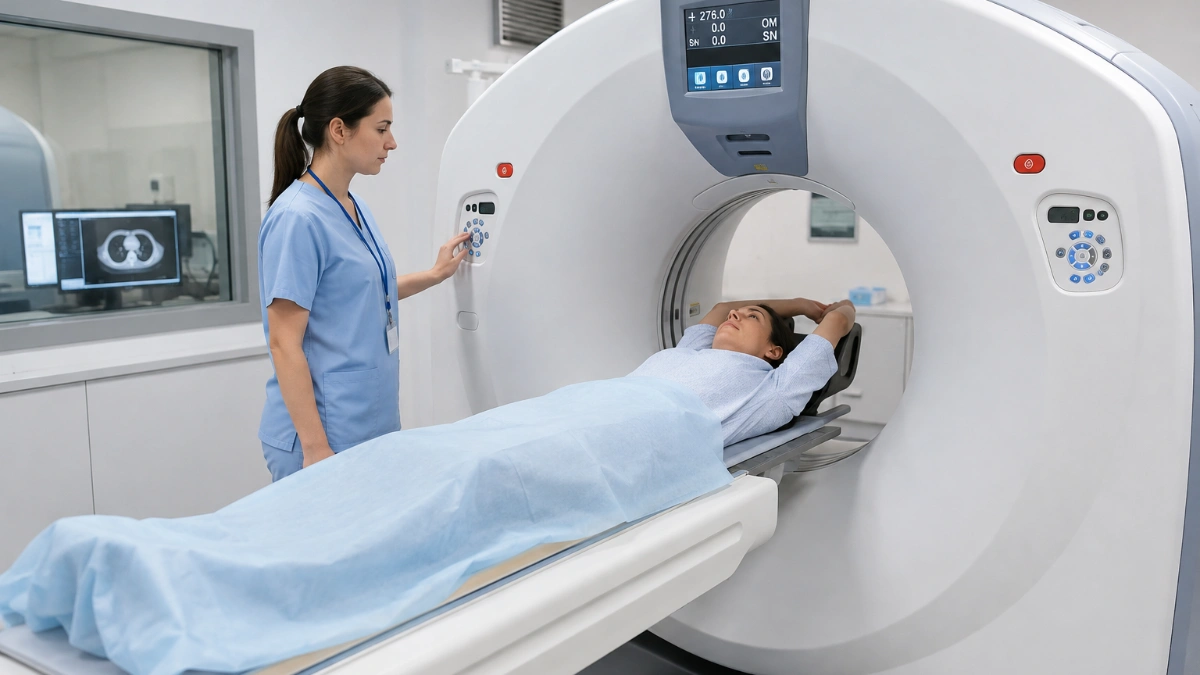
During a CT scan, the patient lies on a motorised table that moves through the circular opening of the scanner.
An X-ray source rotates around the body while detectors collect information from multiple angles. A computer then reconstructs the data into cross-sectional images for the radiologist to review.
Depending on the examination, these images can also be reconstructed in different planes or displayed as three-dimensional views.
How Should You Prepare for a CT Scan?
Preparation depends on the type of CT and whether contrast will be used. Not every examination requires fasting or a change to the patient’s normal routine.
Instructions may cover:
- eating and drinking
- whether fasting is required
- regular medications
- removing jewellery or metal objects
- when to arrive
- preparation for contrast administration
Tell the medical team about current medications, relevant medical conditions, kidney problems and any previous reactions to contrast material.
Patients who are pregnant or think they may be pregnant should also tell the doctor or imaging team before the examination.
Do not stop prescribed medication unless your medical team specifically tells you to do so.
What Happens During a CT Scan?
The patient lies on the examination table while it moves through the scanner and the images are acquired.
The scan itself is generally painless. You may be asked to remain still or hold your breath for a few seconds because movement can reduce image quality.
A CT scanner is relatively open compared with the longer enclosed space of a conventional MRI scanner. Image acquisition is usually fast, although the total appointment can take longer when preparation or contrast administration is required.
What Is a CT Scan With Contrast?
Contrast-enhanced CT uses a contrast material to make certain organs, blood vessels or abnormalities easier to distinguish.
For many examinations, contrast is injected into a vein. Depending on the type of CT, it may also be given orally or by another route.
Not every CT scan requires contrast. The decision depends on the body area and the information the doctor needs from the examination.
Some patients experience a temporary warm sensation or unusual taste after intravenous contrast. Tell the imaging team about previous contrast reactions and relevant kidney problems before contrast is administered.
Is a CT Scan Safe?
CT uses ionising radiation. The amount of radiation depends on the body area, examination type and imaging protocol.
Doctors request CT when the expected diagnostic benefit is considered to justify the radiation exposure. When appropriate for the clinical question, imaging methods that do not use ionising radiation, such as ultrasound or MRI, may be considered instead.
Radiation exposure requires particular consideration in children because they are more sensitive to its effects than adults. CT protocols can be adjusted according to patient size and the purpose of the examination.
Can You Have a CT Scan During Pregnancy?
CT may be performed during pregnancy when it is medically necessary. The decision depends on the body area being examined, the clinical situation and the information required.
Ultrasound or MRI may sometimes be considered because they do not use X-rays. CT may still be appropriate when another examination cannot provide the required information or when imaging is needed quickly.
Patients who are pregnant or may be pregnant should tell their doctor and CT technologist before the scan.
What Are the Possible Risks of CT Contrast?
Most patients receive iodinated CT contrast without serious problems, but adverse reactions can occur.
The medical team may consider factors such as:
- previous reactions to iodinated contrast
- kidney function when clinically relevant
- the possibility of contrast leaking outside the vein
Serious reactions to modern iodinated contrast are uncommon, but previous reactions and relevant medical conditions should be reported before the examination.
Whether contrast is appropriate is assessed individually.
How Long Does a CT Scan Take?
CT image acquisition is usually fast, but the total appointment time depends on the examination.
Some scans acquire the required images within minutes. Positioning, preparation, contrast administration or additional imaging phases can make the visit longer.
Patients should ask the imaging department how much time to allow for their specific examination rather than relying on one standard CT scan duration.
When Will CT Scan Results Be Available?
A radiologist reviews the CT images and prepares a report describing the relevant findings.
Reporting time depends on the type and urgency of the examination and the hospital’s reporting process. Emergency imaging may need rapid review, while routine scans may follow a different schedule.
CT findings should be interpreted together with symptoms, medical history, examination findings and other tests. A CT result alone does not always establish a final diagnosis.
What Can a CT Scan Detect?
What CT can identify depends on the body area and examination protocol.
It may provide information about:
- fractures and other bone abnormalities
- internal injuries and bleeding
- lung abnormalities
- infection or inflammation
- certain tumours
- enlarged lymph nodes
- blood vessel abnormalities
- kidney and urinary tract problems
- abdominal and pelvic conditions
- some cardiovascular conditions
FindingSomeabnormality on CT does not automatically determine the treatment. Further imaging, laboratory tests, biopsy or specialist assessment may still be required.
CT vs MRI: Which One Do You Need?
The CT and MRI use different technologies and provide different types of information.
CT uses X-rays and generally acquires images quickly. It is particularly useful for many emergency, lung and bone assessments.
MRI uses a strong magnetic field and radiofrequency signals rather than ionising radiation. It can provide greater contrast between many soft tissues and is often used to assess the brain, spinal cord, joints and other soft-tissue structures.
Neither test is universally better. The appropriate examination depends on the suspected condition and the clinical question. Some patients may need both.
What Types of CT Scans Are Available?
CT can be performed using different protocols according to the body area and reason for imaging.
Common examinations include:
- head CT
- chest CT
- abdominal and pelvic CT
- spine CT
- CT angiography (CTA)
- cardiac CT
- high-resolution CT (HRCT) of the lungs
- CT colonography
- CT urography
PET/CT is different from conventional CT because it combines CT with positron emission tomography to provide anatomical and metabolic information.
The doctor or radiologist selects the examination according to the patient’s clinical needs.
CT Scan in Turkey for International Patients
International patients considering a CT scan in Turkey should provide relevant medical information so the medical team can understand why imaging has been requested.
Useful records may include:
- the referring doctor’s report
- previous CT or MRI images
- laboratory results
- pathology reports when relevant
- previous treatment records
- a current medication list
At Avicenna International Hospital, available medical records and previous imaging may be reviewed before another examination is recommended. The relevant medical team can then determine whether CT is appropriate, whether contrast may be required and whether another type of imaging or specialist assessment is needed.
Patients should provide the original imaging files when available, rather than relying only on written reports.
How Much Does a CT Scan Cost in Turkey?
The cost of a CT scan in Turkey depends on the body area, examination protocol, use of contrast and whether additional medical services are required.
For this reason, one price cannot accurately represent every CT examination. Patients should request an individual estimate based on the scan that has been recommended.
At Avicenna International Hospital, international patients can submit their medical information to clarify which examination is required and receive information about the expected cost before arranging their visit.
Frequently Asked Questions
Yes. CT stands for computed tomography. The older term CAT scan, meaning computed axial tomography, is also sometimes used for the same imaging technology.
The scan itself is generally painless. Patients need to remain still on the table, and intravenous contrast may cause a brief warm sensation in some people.
Yes. CT uses ionising X-ray radiation. The amount depends on the examination and imaging protocol.
No. CT can be performed with or without contrast. The decision depends on the body area and what the doctor needs to investigate.
It depends on the examination. Some CT protocols require fasting, while others do not. Follow the preparation instructions provided for your specific scan.
CT images are stored digitally and may be made available to patients depending on the hospital’s system. Medical interpretation should be performed by a radiologist and considered together with the patient’s clinical information.
Neither is universally better. CT and MRI provide different information and are selected according to the body area, suspected condition, urgency and clinical question.
Metal implants do not create the same magnetic-field restrictions associated with MRI. Patients should still tell the imaging team about implants and medical devices before the examination.
CT can identify and characterise abnormalities that may be associated with certain cancers and may be used for cancer assessment, staging and follow-up. A CT finding alone does not always confirm cancer, and further investigation such as biopsy may be required.
Sometimes. Repeat CT may be medically necessary to monitor a condition or response to treatment. Doctors consider both the clinical need and radiation exposure when deciding whether another CT examination is appropriate.
How Is the Right CT Examination Chosen?
The appropriate CT examination is selected according to the patient’s symptoms, medical history, previous findings and the clinical question that needs to be answered.
At Avicenna International Hospital, existing medical records and imaging can be reviewed before further diagnostic imaging is recommended. The type of CT scan, need for contrast, preparation, expected cost and any additional investigations depend on the individual clinical assessment.