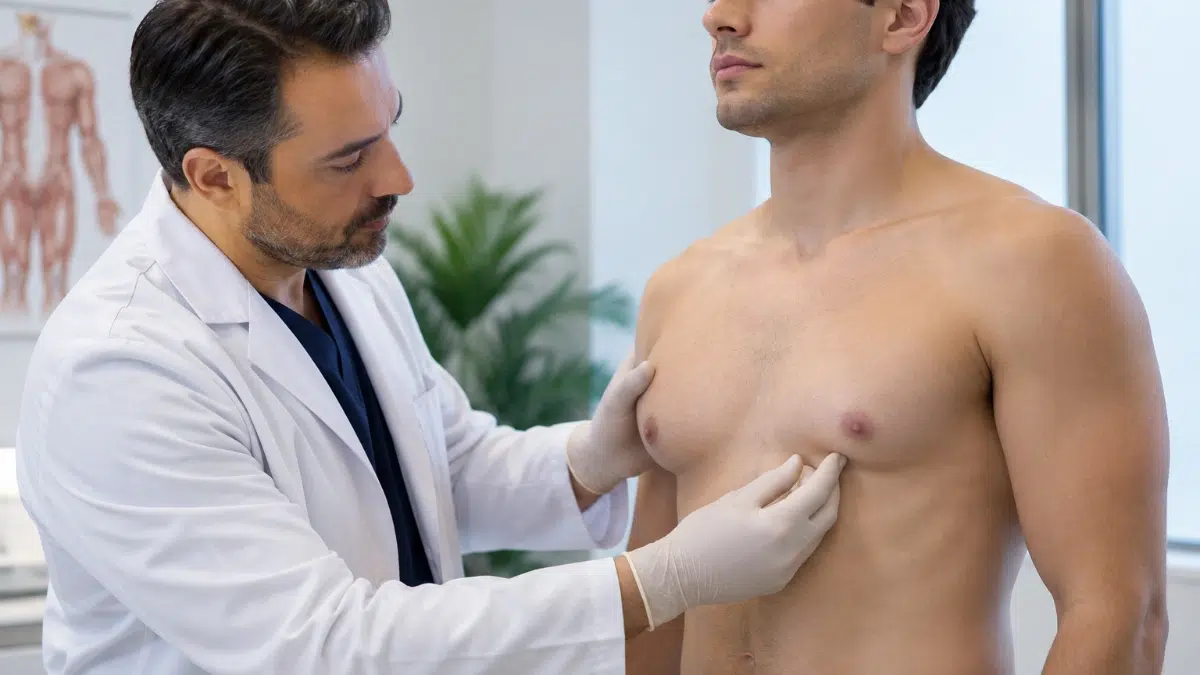


Fibrosis after liposuction refers to firm or hardened areas that can develop as tissues heal and scar tissue forms beneath the skin. However, firmness, swelling, lumps and unevenness during early recovery do not automatically mean fibrosis. A physical examination may be needed to distinguish expected postoperative changes from persistent scar tissue, fluid collections or other complications.
The appearance and recovery of the treated area change over time after liposuction. If firmness or contour irregularity persists, worsens or is accompanied by other symptoms, the appropriate next step is assessment by the surgeon rather than trying to diagnose or treat the area at home.
What Is Fibrosis After Liposuction?
Fibrosis is the formation of fibrous scar tissue as part of the body’s response to tissue injury. Liposuction causes controlled tissue disruption beneath the skin, so some degree of healing and scar formation is expected.
In some patients, areas may remain unusually firm, tethered or irregular as healing progresses. These changes are often described as post-liposuction fibrosis.
Fibrosis can affect the way the tissue feels and, in some cases, the contour of the treated area. Its severity and significance vary, and not every firm area after surgery requires treatment.
Evidence regarding the diagnosis and management of fibrosis specifically after liposuction remains limited, and published research acknowledges this limitation.
Is Hardness After Liposuction Always Fibrosis?
No. Hardness after liposuction does not necessarily mean that abnormal fibrosis has developed.
During early recovery, inflammation, swelling and changes within the healing tissues can make treated areas feel firm, lumpy or uneven. These changes may gradually soften as recovery progresses.
Other conditions can also cause a lump, hard area or contour change after liposuction, including:
- postoperative swelling
- a fluid collection such as a seroma
- a collection of blood such as a hematoma
- scar tissue
- contour irregularity
- tissue adherence or tethering
- infection or inflammation
Because these problems do not all require the same treatment, persistent hardness should be assessed rather than automatically labelled as fibrosis.
What Does Fibrosis After Liposuction Feel or Look Like?
Persistent fibrosis may be experienced as firm, hardened or less mobile tissue beneath the skin.
Depending on the area and severity, a patient may notice:
- persistent areas of firmness
- lumps or hardened tissue
- uneven texture
- tethering of the skin
- dimpling or contour irregularities
- discomfort or tenderness in some cases
These findings are not specific to fibrosis. Post-liposuction contour irregularities can have several causes, including fibrous adhesions, excessive superficial fat removal and skin redundancy.
This is why appearance or touch alone is not always enough to determine what is happening beneath the skin.
When Can Fibrosis Develop After Liposuction?
Tissue firmness can occur during the normal healing process, while persistent fibrotic changes may become more apparent as postoperative swelling evolves.
There is no single point after surgery at which every hard area can reliably be classified as fibrosis. The timing depends on the procedure, treated area, healing response and whether other postoperative issues are present.
An area that feels uneven during early recovery may change substantially over the following weeks and months. For that reason, both the timing and progression of symptoms matter when a surgeon evaluates the area.
Why Can Fibrosis Occur After Liposuction?
Fibrosis develops through the body’s wound-healing and scar-forming response following tissue injury.
After liposuction, the tissues beneath the skin undergo inflammation and repair. Collagen and other components of healing tissue are produced as the area recovers. In some situations, this healing response can result in areas of persistent firmness or fibrous tissue.
It is difficult to predict precisely who will develop clinically significant fibrosis. The appearance of the treated area can also be influenced by the extent and technique of liposuction, tissue characteristics, previous procedures and postoperative complications.
For this reason, statements that one specific patient characteristic or postoperative behaviour directly causes fibrosis should be treated cautiously.
Can Fibrosis After Liposuction Be Prevented?
There is no method that can guarantee that fibrosis will not develop after liposuction.
Patients can support postoperative recovery by following the instructions provided by their surgeon, attending follow-up appointments and reporting unexpected changes. The postoperative plan may include guidance about activity, wound care and compression, depending on the procedure.
Avoiding smoking and following general surgical aftercare instructions are also relevant to wound healing, but patients should be cautious about products or treatments marketed as guaranteed ways to “prevent fibrosis.”
Evidence for many interventions marketed specifically to prevent post-liposuction fibrosis remains limited, so patients should discuss preventive measures with their surgeon rather than relying on supplements or treatments promoted for this purpose.
Do Compression Garments Prevent Fibrosis After Liposuction?
Compression garments are commonly included in postoperative care after liposuction, but it is not established that they reliably prevent fibrosis.
Surgeons may recommend compression for reasons such as supporting the treated area or managing postoperative swelling. The type of garment and how long it should be worn depend on the procedure and surgeon’s protocol.
A review of postoperative compression in plastic surgery found that high-quality evidence supporting compression garments is limited in several areas of body-contouring surgery. It also noted potential problems with excessive or poorly fitted compression.
Patients should therefore follow their surgeon’s instructions rather than assuming that tighter compression or wearing a garment for longer will prevent fibrosis.
If a compression garment causes excessive pain, skin changes, numbness or appears to create folds or uneven pressure, the surgical team should be contacted.
Does Lymphatic Massage Help Fibrosis After Liposuction?
Manual lymphatic drainage is used by some surgeons and postoperative-care teams after liposuction, particularly to help manage swelling, but evidence that massage specifically prevents or eliminates fibrosis is not definitive.
Some small studies and clinical literature report improvements in postoperative swelling or tissue changes with manual lymphatic drainage and related therapies. However, protocols vary considerably and the available evidence is limited.
Research into massage for postoperative scars more broadly has also found inconsistent methods and limited high-quality evidence, despite reports of possible benefits.
This distinction is important. Massage should not be presented as a guaranteed treatment for fibrosis.
Patients should also avoid aggressive self-massage without guidance. Whether massage is appropriate, when it can begin and how much pressure should be used depend on the operation and stage of healing.
Can Fibrosis After Liposuction Go Away on Its Own?
Some postoperative firmness and irregularity can improve as swelling decreases and tissues remodel, but persistent fibrosis does not behave the same way in every patient.
The likelihood of improvement depends on what is actually causing the firmness, how long it has been present and the characteristics of the affected tissue.
This is another reason to distinguish normal postoperative changes from established scar tissue or another complication before deciding that treatment is necessary.
A surgeon may recommend observation when the area is still evolving and there are no concerning findings. Persistent or significant abnormalities may require further assessment.
How Is Fibrosis After Liposuction Diagnosed?
Assessment usually begins with the patient’s surgical history and a physical examination of the treated area.
The doctor may consider:
- when the firmness first appeared
- whether it is improving or worsening
- the original liposuction technique and treated areas
- previous body-contouring procedures
- pain or tenderness
- swelling
- skin changes
- contour irregularities
- previous postoperative complications
The tissue may be examined for firmness, mobility, adherence and differences between the treated areas.
If the findings could represent something other than fibrosis, additional assessment or imaging may sometimes be appropriate. The goal is to identify the cause of the abnormality before selecting treatment.
How Is Fibrosis After Liposuction Treated?
Treatment depends on the cause, severity, duration and physical characteristics of the affected area. Not every patient with postoperative firmness needs active treatment.
Management may include observation during ongoing healing, surgeon-directed postoperative care or selected nonsurgical approaches. Persistent contour abnormalities may require a different approach from early postoperative swelling or firmness.
Published evidence specifically addressing fibrosis management after liposuction remains limited. Even recent research proposing treatment algorithms acknowledges the lack of established evidence in this area.
For that reason, treatment should be selected after examination rather than offering the same massage, device or procedure to every patient with a hard area.
Can Ultrasound or Radiofrequency Treat Post-Liposuction Fibrosis?
Energy-based treatments should not automatically be recommended simply because an area feels hard after liposuction.
Therapeutic ultrasound and other modalities have been used in postoperative care, and small studies have reported changes in pain, swelling or tissue fibrosis. However, the evidence is not strong enough to conclude that one device is the standard treatment for post-liposuction fibrosis.
Radiofrequency, ultrasound-assisted procedures and other technologies also differ substantially in how they work and what they are intended to treat.
Before considering an energy-based treatment, the surgeon should determine whether the problem is actually fibrosis and whether intervention is appropriate at that stage of recovery.
Is Another Liposuction Procedure Needed for Fibrosis?
Most postoperative firmness should not lead directly to another liposuction procedure.
Secondary surgery may be considered in selected patients with persistent contour abnormalities after adequate healing, but operating on previously treated tissue can be more complex because scar tissue and altered tissue planes may already be present.
Published surgical literature notes that correction of contour irregularities in areas with postsurgical scarring and fibrosis can be difficult.
A decision about revision therefore depends on the specific abnormality, tissue condition, previous procedure and whether enough time has passed for the result to be assessed appropriately.
When Should You Contact Your Surgeon?
Contact your surgical team if a postoperative area is worsening, unusually painful or associated with symptoms that do not fit the recovery instructions you were given.
Medical assessment is particularly appropriate for:
- increasing redness or warmth
- fever or other possible signs of infection
- significant or worsening pain
- rapidly increasing swelling
- fluid drainage
- sudden changes in the treated area
- a new or enlarging lump
- persistent firmness or contour changes that concern you
These symptoms do not necessarily mean fibrosis. Some can indicate other postoperative complications that need different management.
If you are unsure whether a change is part of normal healing, contact the surgeon rather than attempting aggressive massage or another treatment on your own.
How Long Should You Wait Before Assessing the Final Liposuction Result?
Liposuction results should not usually be judged during the early postoperative period because swelling and tissue healing can temporarily alter the contour.
Recovery varies according to the extent of liposuction, areas treated, surgical technique and individual healing. Some irregularity that is noticeable early may become less apparent as swelling decreases and the tissues settle.
If a contour problem persists, the surgeon can determine whether continued observation is appropriate or whether further evaluation is needed.
This is particularly important before considering revision treatment. A persistent abnormality should be assessed based on the patient’s actual recovery rather than a fixed timeline taken from another patient’s experience.
Fibrosis After Liposuction in International Patients
International patients who develop persistent firmness or contour changes after liposuction should provide as much information about their original procedure as possible when requesting an assessment.
Useful information may include:
- the date of surgery
- areas treated
- type of liposuction performed
- operative or discharge reports
- photographs showing how the area has changed
- details of postoperative complications
- previous massage or other treatments
- current symptoms
At Avicenna International Hospital, available surgical records and the patient’s current findings may be reviewed as part of the assessment.
The aim is to determine whether the changes appear consistent with the expected healing process, persistent scar tissue, a contour abnormality or another postoperative issue before discussing management.
Patients who had their original liposuction elsewhere should not assume that a specific treatment can be recommended from photographs alone. An in-person examination or additional assessment may be necessary.
Frequently Asked Questions
Is Fibrosis Normal After Liposuction?
Some scar formation is part of normal healing after tissue injury, and temporary firmness can occur after liposuction. Persistent or significant hardening is different and should be assessed in the context of the patient’s recovery.
How Do I Know If I Have Fibrosis After Liposuction?
You cannot always determine this reliably by touch or appearance alone. Swelling, scar tissue, seroma, contour irregularity and other postoperative changes can produce similar symptoms. A surgeon can assess the area if firmness persists or causes concern.
What Does Liposuction Fibrosis Feel Like?
Patients may describe persistent fibrotic areas as firm, hard, tethered or lumpy. However, those features are not unique to fibrosis and can occur for other reasons after surgery.
Does Massage Break Down Fibrosis?
Massage is used in some postoperative protocols, but it should not be described as a proven method that simply “breaks down” fibrosis. Evidence for postoperative scar massage is heterogeneous, with considerable variation in techniques and outcomes.
Can I Massage Hard Areas Myself?
Do not begin aggressive massage solely because an area feels hard. Ask your surgeon whether massage is appropriate for your stage of recovery and how it should be performed.
Does Wearing a Compression Garment Prevent Fibrosis?
It has not been established that compression garments guarantee prevention of fibrosis. Compression is commonly used after body-contouring surgery, but evidence supporting specific postoperative benefits and protocols is limited.
Can Fibrosis Appear Months After Liposuction?
Changes in firmness and contour can remain noticeable as tissues continue healing. If a new or persistent hard area is noticed months after surgery, assessment can help determine whether it represents fibrosis or another issue.
Can Fibrosis Affect the Final Liposuction Result?
Persistent scar tissue or fibrous adhesions can contribute to contour irregularity in some patients. However, early unevenness should not automatically be considered a permanent result because swelling and tissue remodeling continue during recovery.
Can Fibrosis Be Treated Without Surgery?
Some patients may be managed without additional surgery, depending on the diagnosis, severity and stage of recovery. There is no single nonsurgical treatment that is appropriate for every case of suspected fibrosis.
When Should Fibrosis Be Treated?
Treatment should be considered after determining what is causing the firmness or contour change and whether intervention is actually necessary. Timing depends on the patient’s recovery, symptoms, examination findings and original procedure.
How Is Persistent Firmness After Liposuction Assessed at Avicenna?
Persistent firmness after liposuction should be evaluated according to its cause rather than treated automatically as fibrosis.
At Avicenna International Hospital, assessment can include the patient’s previous liposuction history, available surgical records, current symptoms and examination of the treated area. This helps distinguish expected postoperative healing from persistent scar tissue, contour irregularity or another condition that may require a different approach.
Any recommended treatment, follow-up or revision depends on the patient’s examination, previous procedure, stage of recovery and specialist assessment. Current published evidence on the management of established post-liposuction fibrosis is still limited, so the article should not imply that one massage technique, device or procedure is proven to resolve every case.