
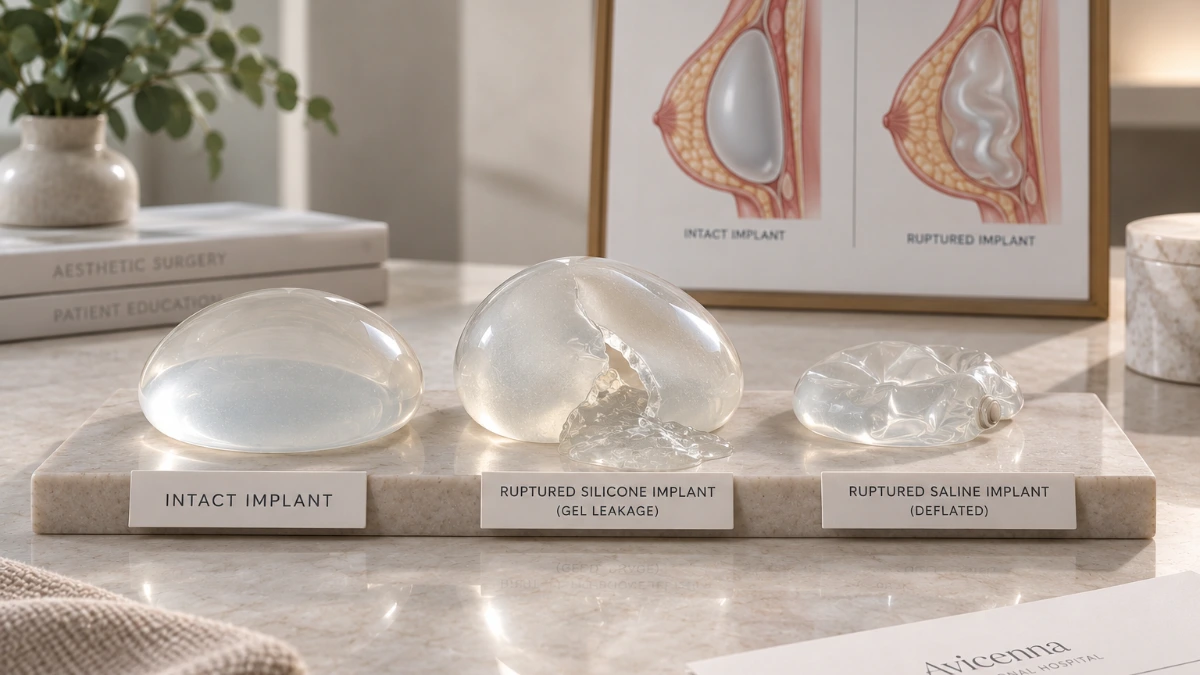
Breast implant rupture occurs when the outer shell of an implant develops a tear or hole. It can happen with both silicone and saline breast implants, but the way a rupture appears differs according to the material inside the implant.
A saline implant usually loses volume after rupture, making the change relatively easy to notice. Silicone implant rupture can be less obvious because the gel may remain within the implant or surrounding capsule. This is known as a silent rupture.
Breast implants are not lifetime devices, and rupture becomes more likely as an implant remains in place for longer. A suspected rupture should be medically assessed because symptoms and appearance alone cannot always determine whether an implant is intact.
What Is a Breast Implant Rupture?
All breast implants have an outer silicone shell. Silicone implants contain silicone gel, while saline implants contain sterile saline solution.
A rupture occurs when the integrity of this outer shell is disrupted.
What happens afterwards depends partly on the implant filling. A saline implant generally deflates as saline leaves the shell. With a silicone implant, the gel may remain within the implant or the fibrous capsule surrounding it, so there may be little or no visible change.
This difference is important because a patient with a ruptured silicone implant may not know that rupture has occurred.
What Are the Signs of Breast Implant Rupture?
Symptoms vary according to the implant type and whether the rupture causes noticeable changes.
Possible signs include:
- A change in breast size
- A change in breast shape
- Increasing asymmetry
- Lumps around the implant or breast
- Breast pain or tenderness
- Swelling
- Changes in sensation
- Numbness or tingling
- Burning sensations
- Changes in implant firmness or position
These symptoms are not specific to implant rupture. Capsular contracture, implant displacement, fluid around the implant, and other breast conditions can cause similar changes.
Clinical assessment and, when appropriate, imaging may therefore be needed to identify the cause.
What Is a Silent Breast Implant Rupture?
A silent rupture is a silicone implant rupture that causes no obvious symptoms or visible changes.
Unlike a saline implant, a ruptured silicone implant does not necessarily deflate. The silicone gel may remain within the implant or inside the fibrous capsule that has formed around it.
For this reason, appearance and physical examination alone may not identify a silent rupture.
This is why imaging has an important role in the long-term monitoring of silicone breast implants.
Silicone vs. Saline Implant Rupture
Although both types of breast implants can rupture, they usually behave differently afterwards.
| Factor | Silicone Implant Rupture | Saline Implant Rupture |
|---|---|---|
| Implant filling | Silicone gel | Sterile saline solution |
| Deflation | May not occur | Usually occurs |
| Visible change | May be absent | Loss of volume is often noticeable. |
| Silent rupture | Possible | Deflation usually makes rupture apparent |
| Imaging | Often important for confirming rupture | May not always be needed when deflation is clinically clear |
| After rupture | Silicone may remain within the capsule or extend beyond it. | Saline is absorbed by the body. |
Patients comparing the implants themselves can also read Breast Implant Types: Silicone vs. Saline, Round vs. Anatomical.
What Happens When a Saline Breast Implant Ruptures?
When a saline implant shell ruptures, saline leaks out and is absorbed by the body. The implant usually loses volume, causing the affected breast to become smaller or change shape.
Because of this deflation, saline implant rupture is often clinically apparent.
Although the saline is absorbed, the damaged implant shell remains. The implant should therefore be medically assessed. Surgical removal is generally considered, with replacement depending on the patient’s circumstances and preferences.
What Happens When a Silicone Breast Implant Ruptures?
Silicone implant rupture can behave differently because the gel does not necessarily leave the implant area.
If the silicone remains within the fibrous capsule surrounding the implant, the rupture is described as intracapsular. If silicone extends beyond that capsule into surrounding tissues, it is described as extracapsular rupture.
Some silicone ruptures cause symptoms, while others remain silent. Possible changes include altered breast size or shape, lumps, asymmetry, pain, tenderness, swelling, numbness, burning, tingling, or other changes in sensation.
A breast can therefore appear relatively unchanged even when the silicone implant shell is no longer intact.
What Causes Breast Implants to Rupture?
There is not always one identifiable cause.
Breast implants are exposed to mechanical forces over time, and rupture becomes more likely as implants age.
Possible circumstances associated with implant damage include trauma, damage during surgery, and other mechanical factors. However, rupture can also occur without an obvious injury or event.
The absence of trauma therefore does not rule out implant rupture.
Can Breast Implants Rupture Years After Surgery?
Yes. A breast implant that has remained intact for many years can rupture later.
Breast implants should not be considered lifetime devices. However, this does not mean that every implant needs to be replaced automatically after a particular number of years.
There is no universal rule requiring breast implants to be replaced at exactly 10 years.
Instead, patients should understand that the possibility of rupture and other implant-related complications increases over time and that some patients eventually require additional surgery.
Does a Ruptured Breast Implant Hurt?
Not necessarily.
A silicone implant rupture may cause no symptoms at all. Other patients may develop pain, tenderness, swelling, altered sensation, or changes in breast appearance.
A saline rupture may cause a noticeable reduction in breast volume without significant pain.
Pain alone cannot confirm a rupture, and the absence of pain does not mean that the implant is intact.
Is Breast Implant Rupture the Same as Capsular Contracture?
No. They are different implant-related complications.
Breast implant rupture means that the implant shell has developed a tear or hole.
Capsular contracture occurs when the fibrous scar capsule surrounding the implant becomes unusually tight and firm.
The two conditions can cause overlapping symptoms, including changes in breast shape, firmness, or discomfort. Assessment may therefore be required to determine which problem is responsible.
Patients experiencing increasing breast hardness can also read Capsular Contracture After Breast Implants: Signs, Grades, and Treatment.
How Is Breast Implant Rupture Diagnosed?
Assessment usually begins with the patient’s symptoms, implant history, and physical examination.
Relevant information may include:
- When the implants were placed
- Whether they are silicone or saline
- Implant manufacturer and model, if known
- Previous breast or implant surgery
- Recent changes in breast size or shape
- Pain, swelling, or firmness
- Previous breast imaging
- Recent trauma or breast procedures
With saline implants, visible deflation may make rupture relatively apparent.
Silicone rupture can be more difficult to identify clinically, particularly when it is silent. Imaging therefore has a more important role in assessing silicone implant integrity.
Ultrasound vs. MRI for Breast Implant Rupture
Both ultrasound and MRI can be used to evaluate silicone breast implants, but the appropriate examination depends on the clinical situation.
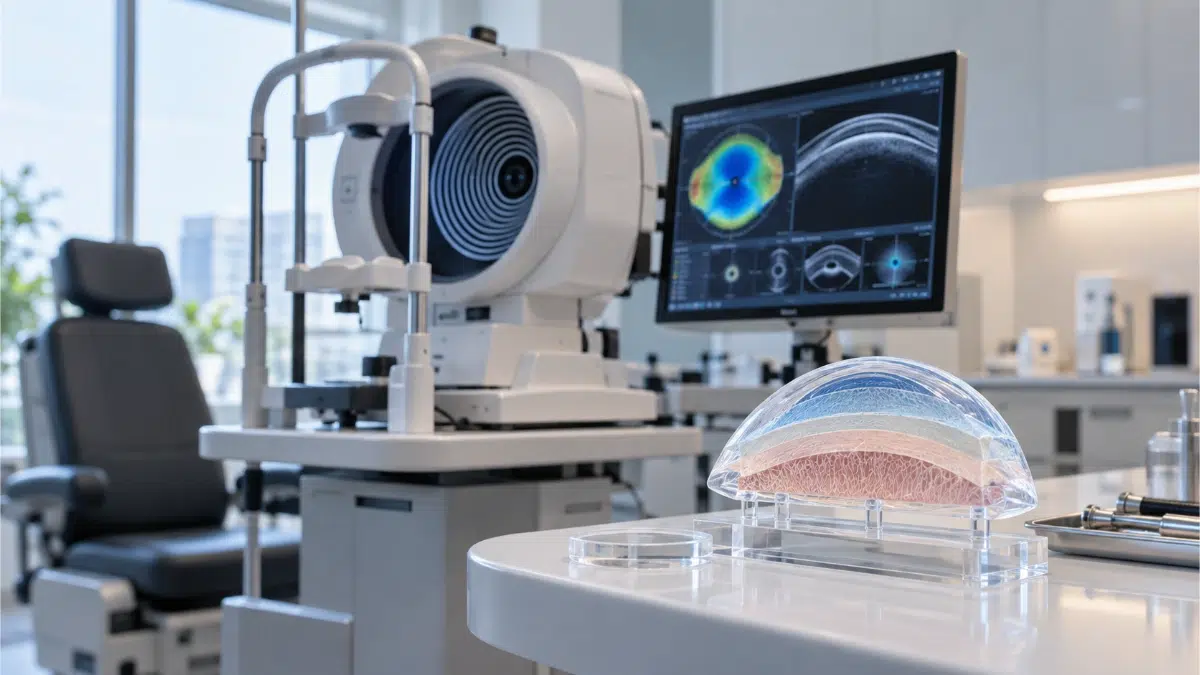
MRI is particularly useful for detecting silent silicone implant rupture. Ultrasound can also be used for implant evaluation and may be an alternative for surveillance in patients without symptoms.
When a silicone implant complication is suspected, MRI without intravenous contrast may be used to assess implant integrity.
An MRI performed specifically to evaluate a breast implant is not necessarily the same examination as a contrast-enhanced breast MRI performed to investigate other breast conditions.
The appropriate imaging test should therefore be selected according to implant type, symptoms, and the clinical question being investigated.
Do Silicone Breast Implants Need Routine Rupture Screening?
Patients with silicone breast implants may require imaging even when they do not have symptoms because rupture can be silent.
Current recommendations referenced in the source advise an initial ultrasound or MRI approximately five to six years after silicone implant placement in asymptomatic patients, followed by imaging every two to three years after a negative examination.
This surveillance is intended to assess silicone implant integrity. It is separate from breast cancer screening.
Patients who develop new symptoms should seek medical assessment rather than waiting for their next scheduled surveillance examination.
Can Mammography Detect a Ruptured Breast Implant?
Mammography is not the primary examination for detecting a silent silicone implant rupture.
The appropriate imaging method depends on the implant type, symptoms, and the clinical question. MRI without contrast and ultrasound can have important roles when silicone implant integrity needs to be assessed.
Patients with breast implants should still follow the breast cancer screening recommendations appropriate for them. Breast cancer screening and implant-integrity surveillance serve different purposes.
Is a Ruptured Breast Implant Dangerous?
A ruptured implant should be medically evaluated, but the implications vary according to the implant type, symptoms, and extent of rupture.
With a saline implant, the saline is absorbed by the body, although the damaged implant shell remains.
With a silicone implant, the gel may remain within the surrounding capsule or extend beyond it. Rupture may also be associated with local symptoms such as pain, lumps, or changes in breast shape.
A suspected rupture should therefore be assessed even when it is painless.
Does a Ruptured Breast Implant Need to Be Removed?
Management depends on the implant type, imaging findings, symptoms, and the patient’s overall surgical situation.
A confirmed ruptured implant may require surgery to remove the damaged implant. With silicone rupture, the surgeon also assesses the surrounding capsule and whether silicone has extended beyond the implant.
The operation is not identical for every patient. Some patients may choose replacement with another implant, while others may prefer implant removal without replacement.
Breast tissue, skin quality, the condition of the capsule, and previous breast surgery can all influence the surgical plan.
Can a New Implant Be Placed at the Same Time?
In selected patients, removal of a ruptured implant and placement of a new implant can be performed during the same operation.
Immediate replacement is not appropriate in every situation.
The decision may depend on:
- Implant condition
- Condition of the surrounding capsule
- Presence of silicone outside the implant
- Infection or inflammation
- Breast tissue and skin quality
- Previous breast operations
- Patient preference
- Whether additional breast reshaping is required
The final plan should be based on clinical and imaging findings rather than assuming that every ruptured implant can simply be exchanged for a new one.
When Should You See a Doctor?
Patients with breast implants should seek medical assessment if they notice a new or unexplained change such as:
- Sudden or progressive loss of breast volume
- Change in breast shape
- Increasing asymmetry
- New lumps
- Persistent breast pain or tenderness
- Swelling
- New firmness
- Changes in implant position
- Numbness, tingling, or other changes in sensation
Silicone implant rupture can also occur without any of these symptoms, which is why recommended implant surveillance remains relevant.
Sudden swelling, significant redness, fever, or rapidly worsening pain should be assessed promptly because these findings may indicate another complication.
Breast Implant Rupture Assessment for International Patients
Patients travelling for assessment or revision surgery should provide as much information about their implants and previous breast procedures as possible.
Useful records may include:
- Date of the original breast augmentation or reconstruction
- Implant card
- Implant manufacturer and model
- Implant size and type
- Previous operative reports
- Implant placement
- Previous revision surgery
- Recent ultrasound, MRI, or other breast imaging
- Details of current symptoms
If previous imaging has shown a rupture, providing the report and available images can assist with preliminary review.
Photographs can show changes in breast shape or symmetry but cannot establish whether a silicone implant has ruptured.
International patients should also discuss postoperative follow-up and what care may be required after returning home if surgery is planned.
Breast Implant Rupture Assessment at Avicenna International Hospital
At Avicenna International Hospital in Istanbul, assessment of suspected breast implant complications is based on the patient’s symptoms, implant history, previous breast surgery, and available imaging.
For international patients, relevant medical records, implant information, and previous imaging may be reviewed before travel. The final diagnosis and treatment plan depend on clinical assessment and, when indicated, appropriate imaging.
If surgery is required, planning considers the condition of the implant and surrounding tissues, previous procedures, and whether the patient wishes to remove or replace the implant.
Frequently Asked Questions
How Do I Know If My Breast Implant Has Ruptured?
A saline implant usually loses volume after rupture. Silicone rupture may cause changes in shape, lumps, pain, or swelling, but it can also occur without noticeable symptoms.
Can a Silicone Implant Rupture Without Symptoms?
Yes. This is called a silent rupture. Imaging may be required because appearance and physical examination alone may not identify it.
Does a Ruptured Saline Implant Deflate Immediately?
A saline implant generally loses volume after rupture, although the speed and appearance of deflation can vary.
Is MRI or Ultrasound Better for Silicone Implant Rupture?
Both can be used. MRI is particularly useful for detecting silent silicone rupture, while ultrasound can also be used for implant evaluation and surveillance.
Can a Breast Implant Rupture After 10 Years?
Yes. Rupture can occur at different times after surgery, and the likelihood increases as implants remain in place for longer.
Do Breast Implants Have to Be Replaced Every 10 Years?
No. Breast implants are not lifetime devices, but there is no universal requirement to replace an intact implant automatically at exactly 10 years.
Can a Ruptured Implant Be Replaced?
In selected patients, the ruptured implant can be removed and a new implant placed during the same operation. The decision depends on the implant, capsule, surrounding tissues, and other clinical findings.
Can You Leave a Ruptured Breast Implant in Place?
A confirmed rupture should be assessed by a surgeon. Management depends on the implant type, extent of rupture, symptoms, and condition of the surrounding tissues.